September 12 – October 25, 2025
Opening Reception: Friday, September 12, 6:00 – 8:00 pm
In-person Artist Talk: Friday, October 10, 6:30 PM
*Nomi Silverman, was the winner of the 2024 Five Points Printmaking Juried Exhibition, juried by Donna Frustere
Artist’s Statement:
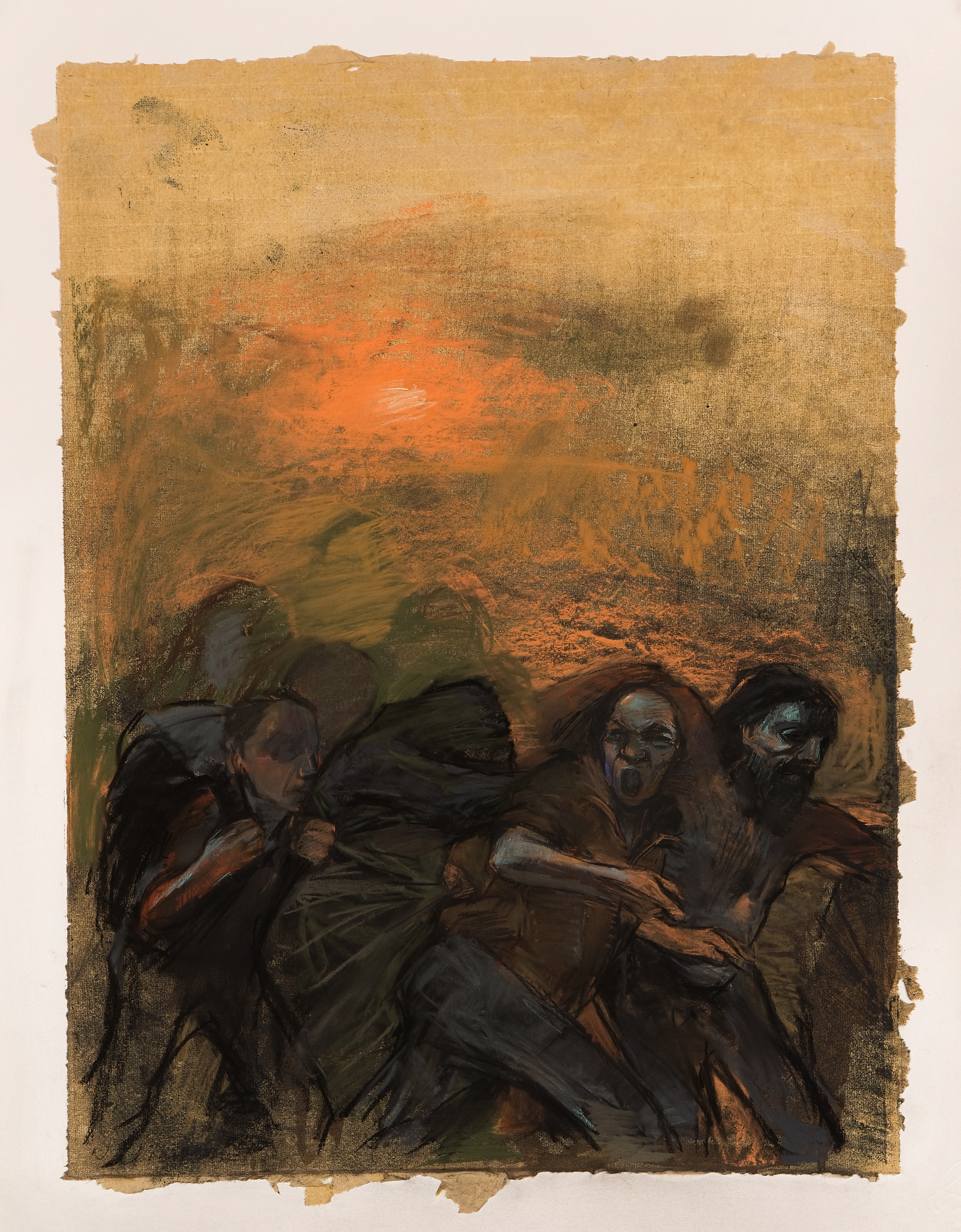
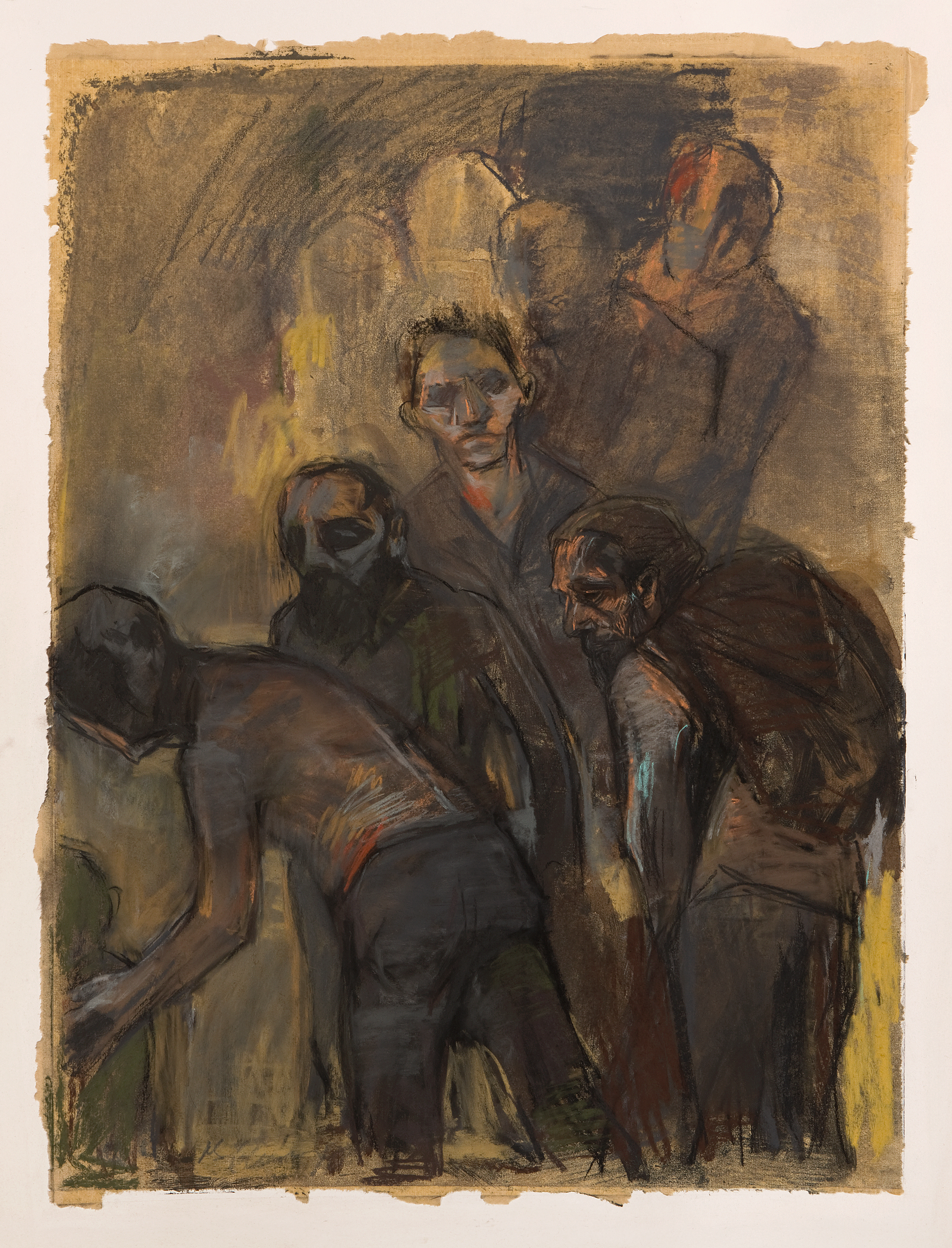
I am a storyteller. I use stories to talk about the humanitarian repercussions of the societal structures that deal with outsiders and those perceived of as “others”—those who have lesser voices and are on the margins of society. I often use the voice of one individual to put a human face to the generic, nameless, faceless masses that are frequently portrayed in the media.
The ramifications of the decisions made by those in positions of power, who are often removed or distant at best and sometimes evil at worst, ripple through families and society. They tear apart the fabric that binds us all together. As some members of my family were killed because of state-sponsored terrorism, I am acutely aware of what happens to others labelled as “vile outsiders”. The pogroms—a foreshadowing of the horrors of the Holocaust that would take the lives of many of my family members who stayed behind—were one of the many reasons my grandmother, grandfather, and uncle left Belarus and landed in New York, where my mother and, eventually, I was born.
Giving agency to the voices of those on the margins of society provides importance and humanization to easily overlooked, generalized, and uncomfortable issues. And when something is personalized, it becomes more difficult to look the other way.
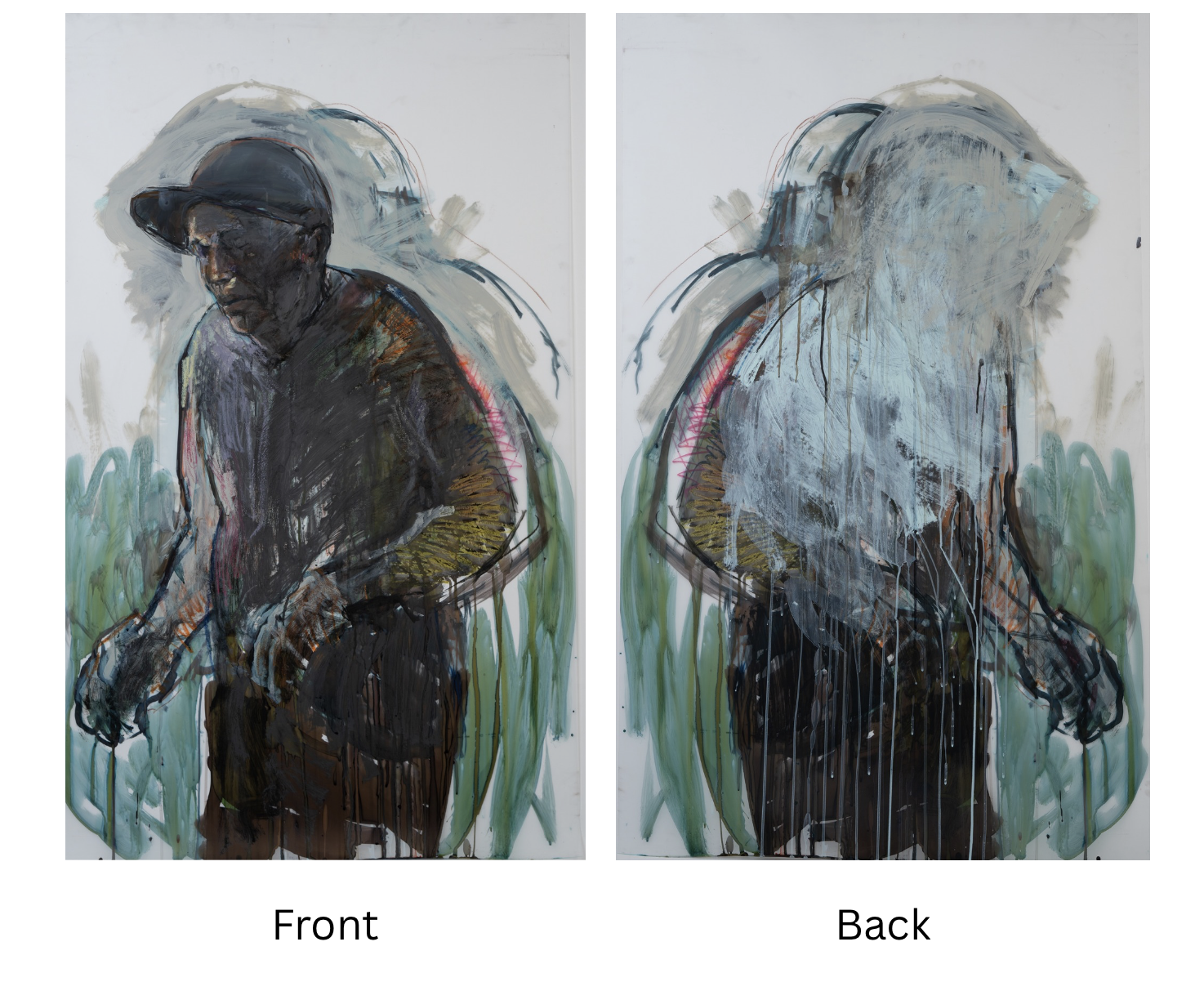
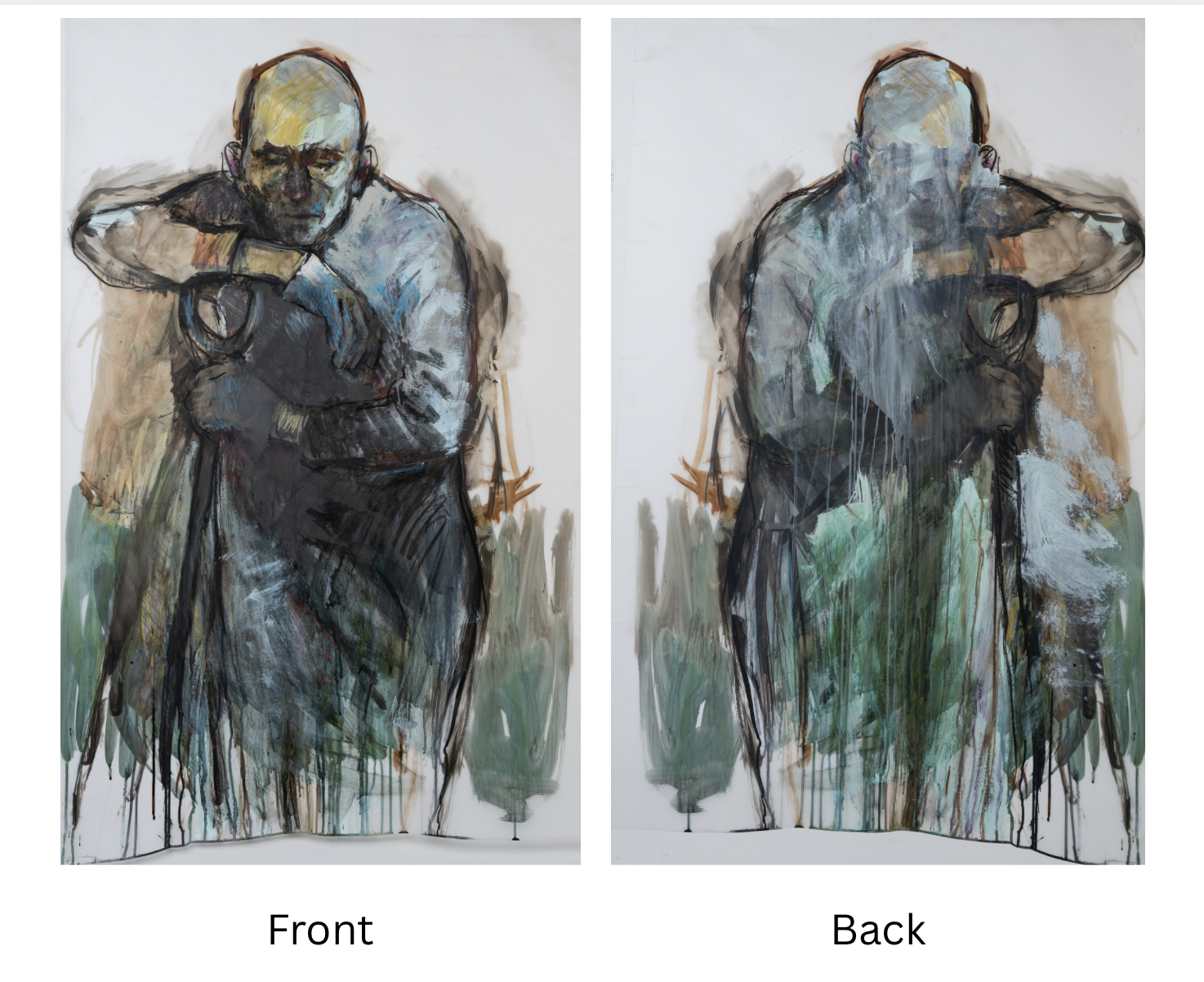
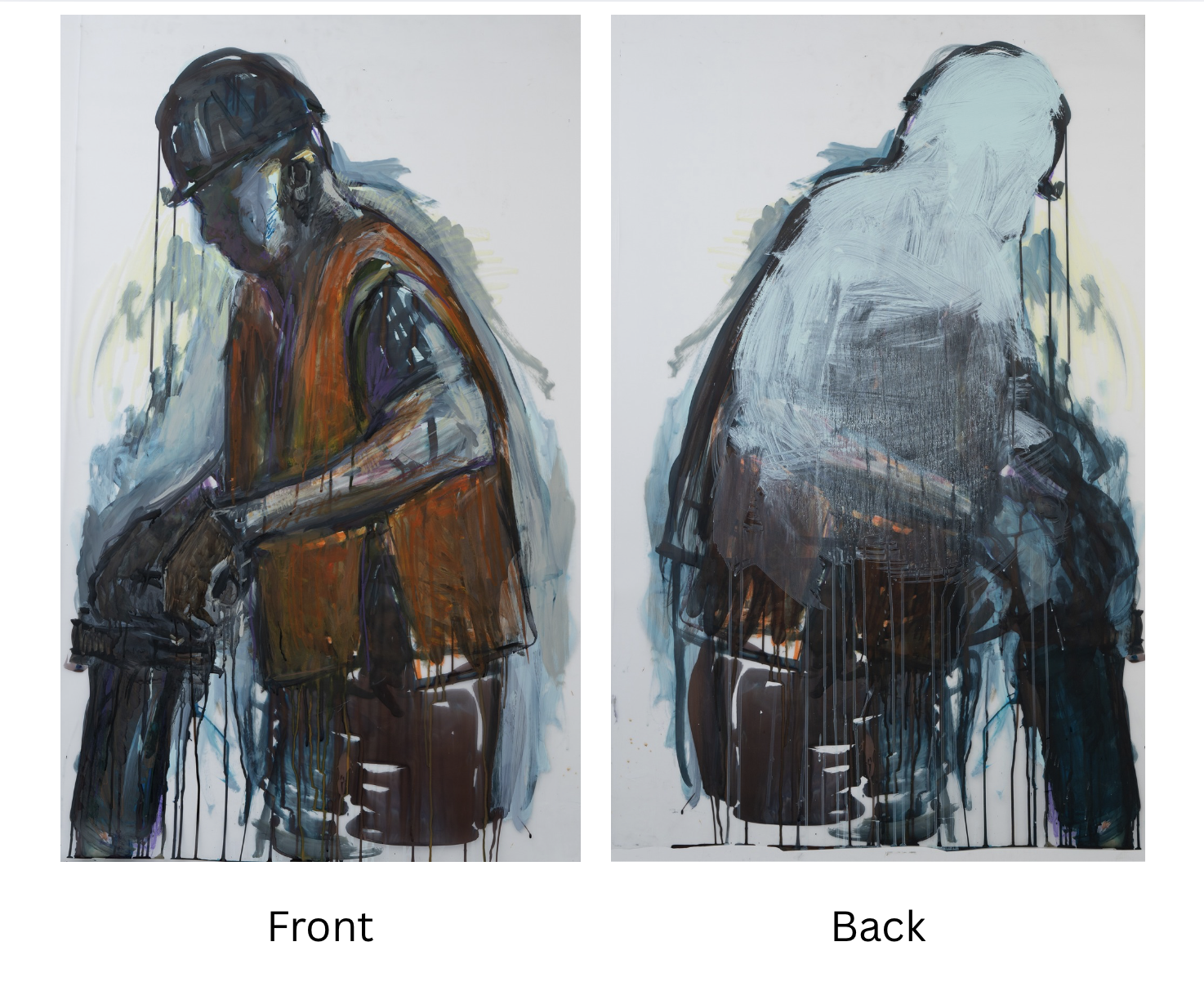
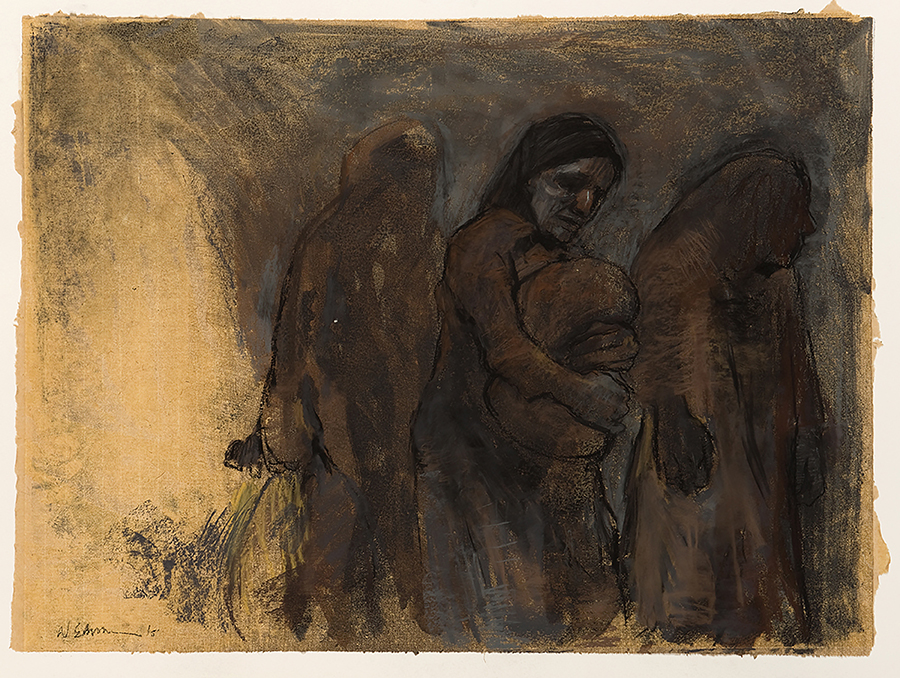
The exhibition started to be about refugees and immigrants (a subject I have been working on for many years). This exhibition does put a large stress on immigrants/refugees and their journeys to escape whatever it is that forced them to leave their home country. However, in the interim, between our initial discussion and now, the concerns and issues have changed, and the focus of the exhibition has expanded to take into account what is going on in our country today, as well as its impact on people. I started looking at the effects policies (or non-policies) coming out of Washington have on the general public—workers, mothers, parents, and certainly, it goes without saying, immigrants. One of my newer bodies of work—the mixed-media drawings on mylar, the Laborer series—talks to the disappearance of people. The translucency of the substrate material allows for the images to be seen on the other side. As I whitewash on the back of the drawings, overlaying the image that is seen, I am mimicking the administration’s mass deportations of people, without regard to rights or even status, that is happening across the country. Furthermore, the subtext—one that makes these drawings more than a current political statement- are the people who hide in the shadows. Quietly raising families, working, contributing, but being part of the underground workforce. Being on translucent paper, they are in our space, yet not. We can see right through them. (Interestingly enough, this subject brings me back to one I have worked with, on and off for years, workers. In fact, my latest newsletter concerns the images of work in art throughout the centuries. I may print it out and bring copies for the show.)
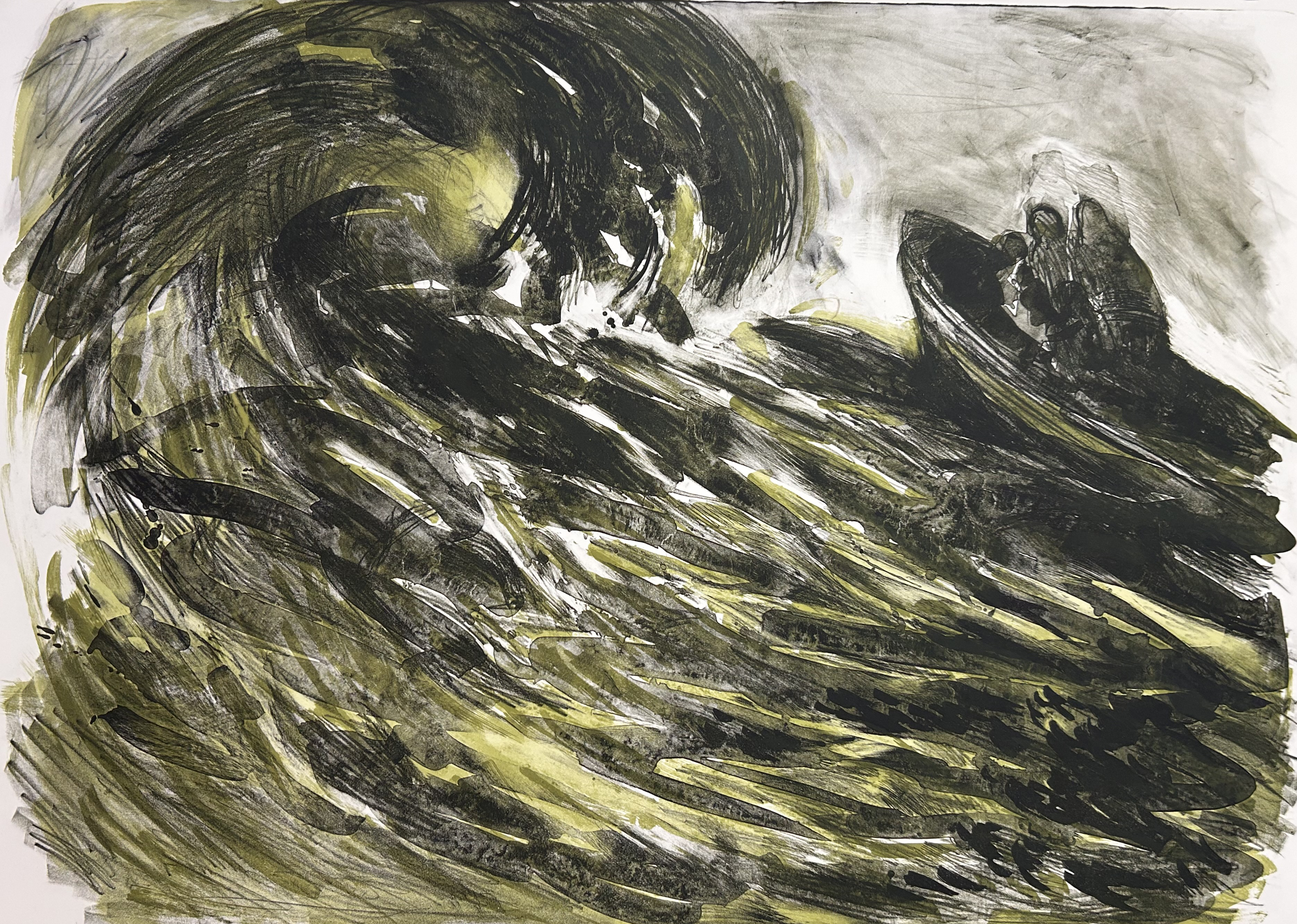
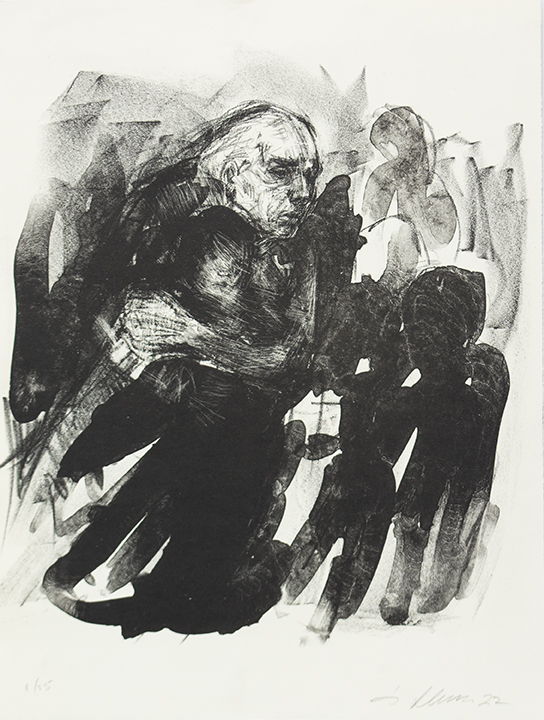
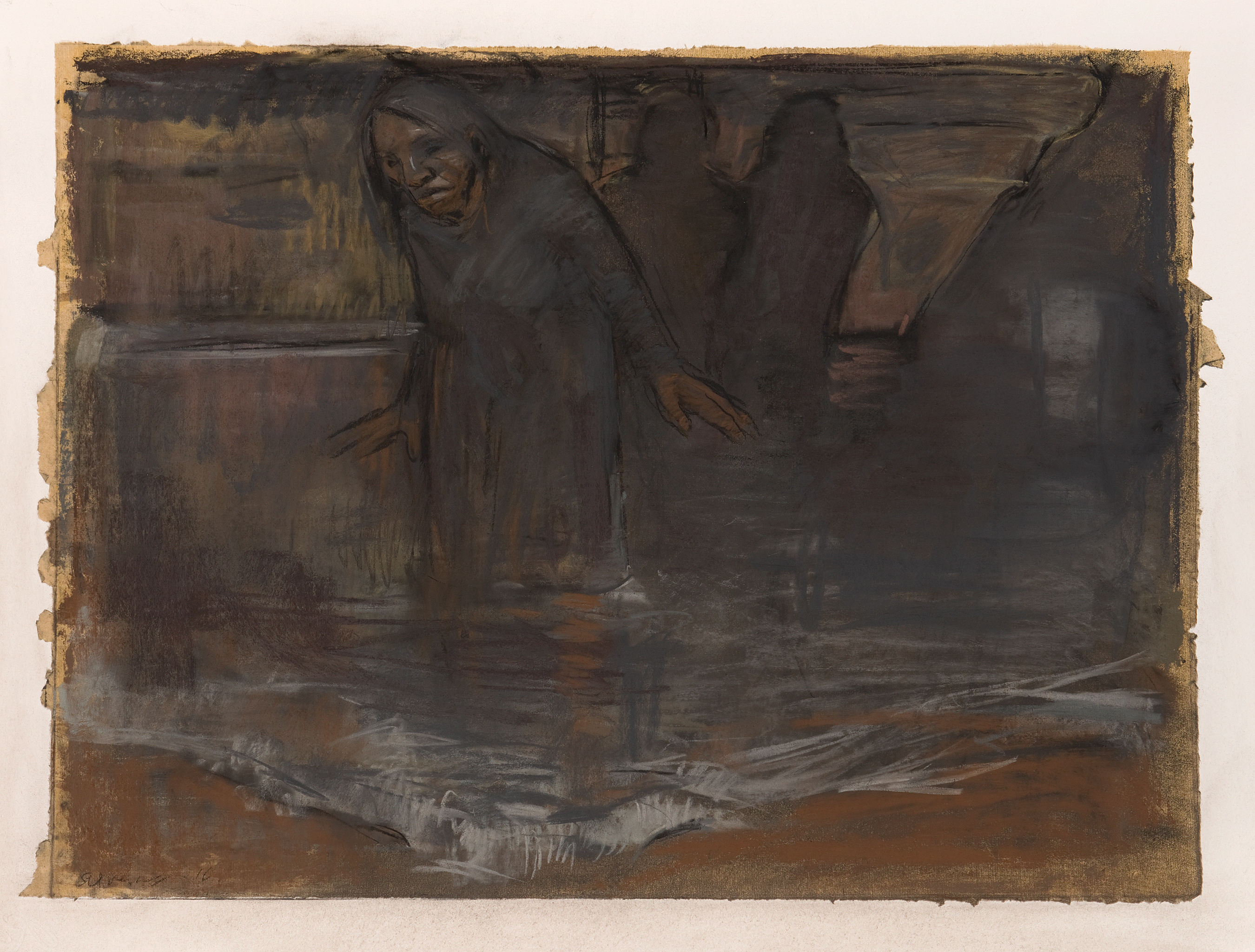
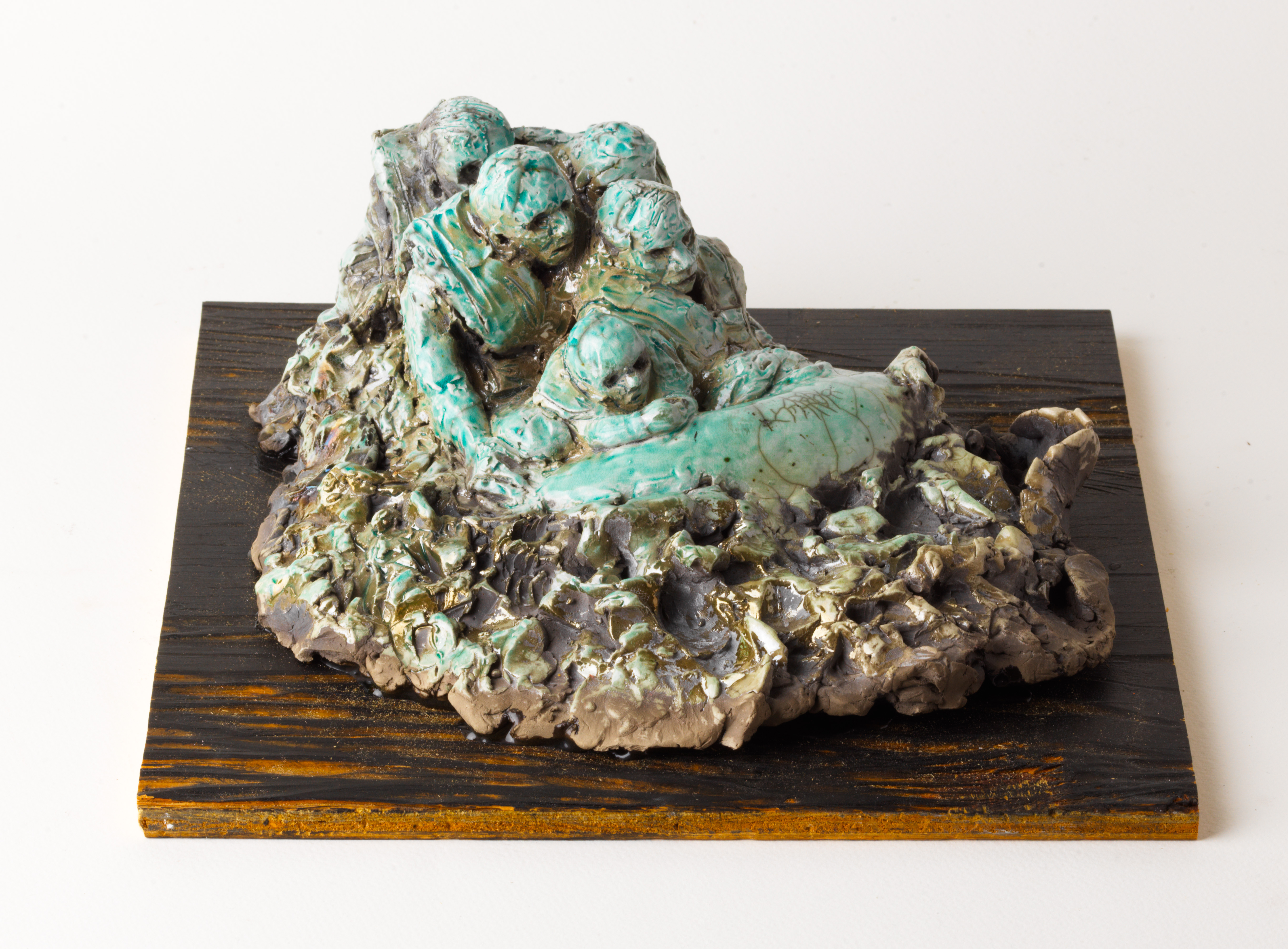
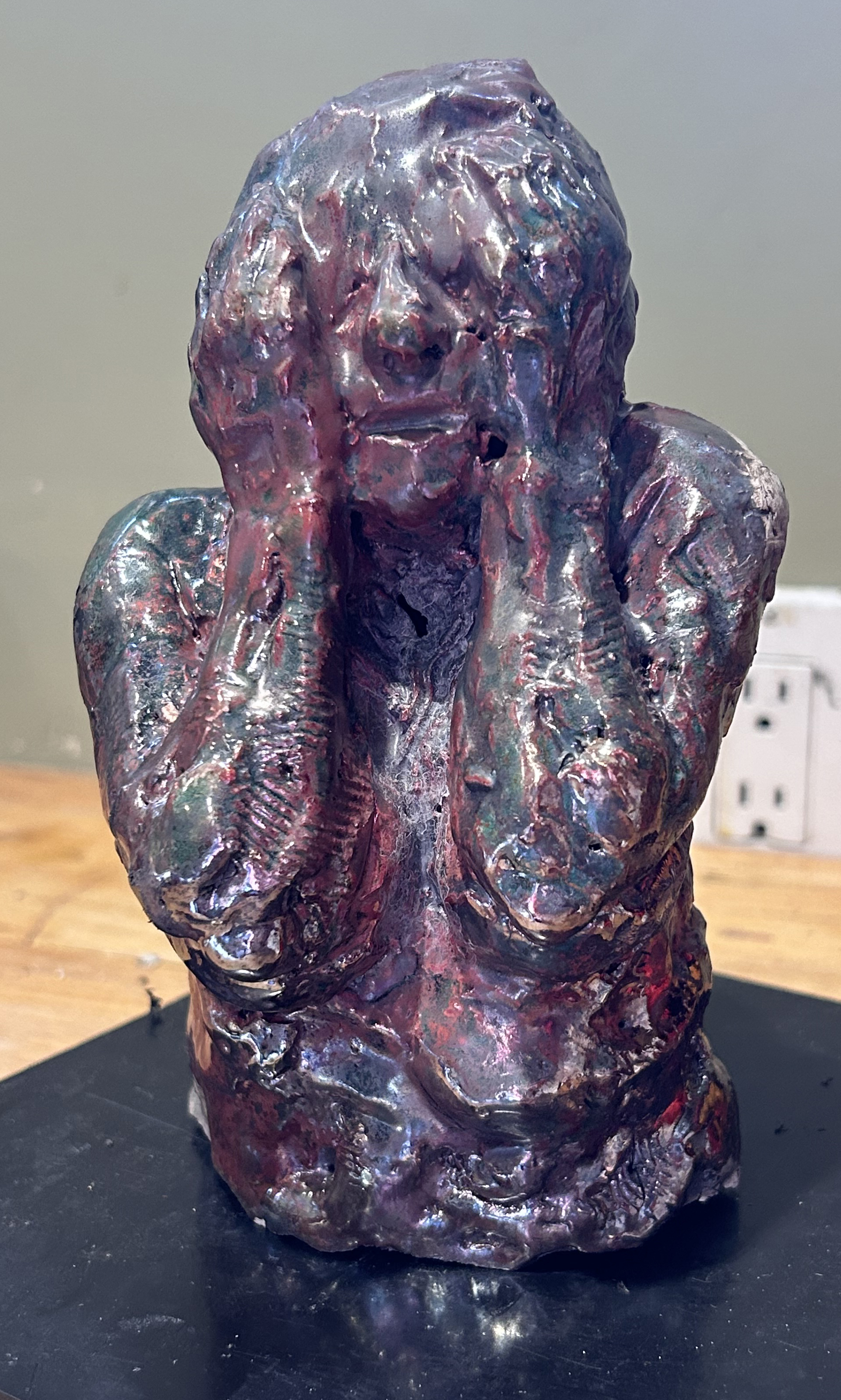
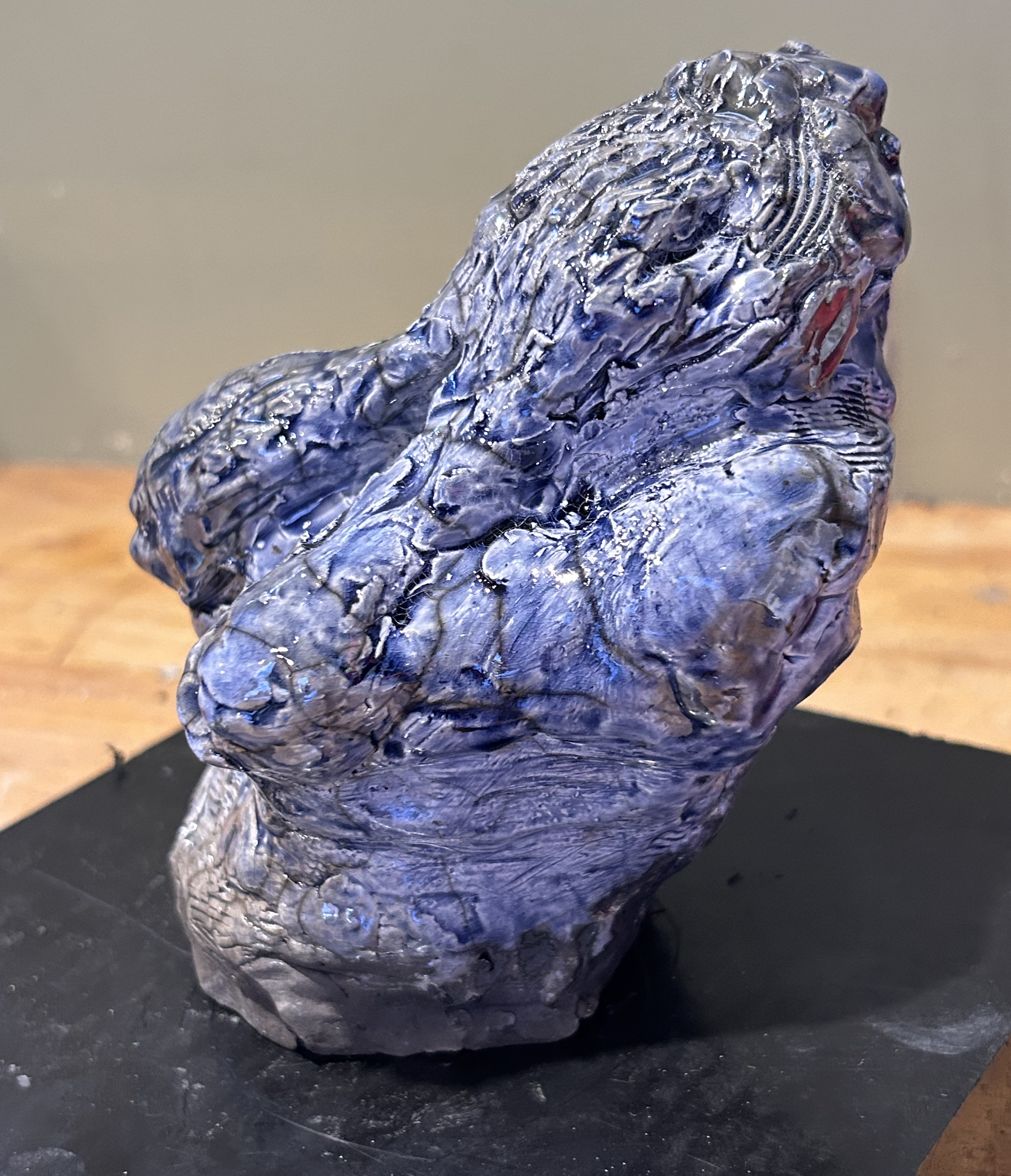
A new lithograph, The Wave, ostensibly talks about refugees, but also refers to the constant wave of stressors, chaos, and profound concerns that barrage us daily, even hourly, and threaten to overwhelm us. One such concern, the status of women, is reflected in Susannah and the Elders, a Biblical story, but certainly familiar to any woman nowadays. James also refers to these chaotic times, even though it occurred a few years ago. A young man from Haiti, who posed for me for many years, talked often about his struggles both here and when he was in Haiti. This sculpture, done years later, seems to come from both him and me. A primal scream if you will.
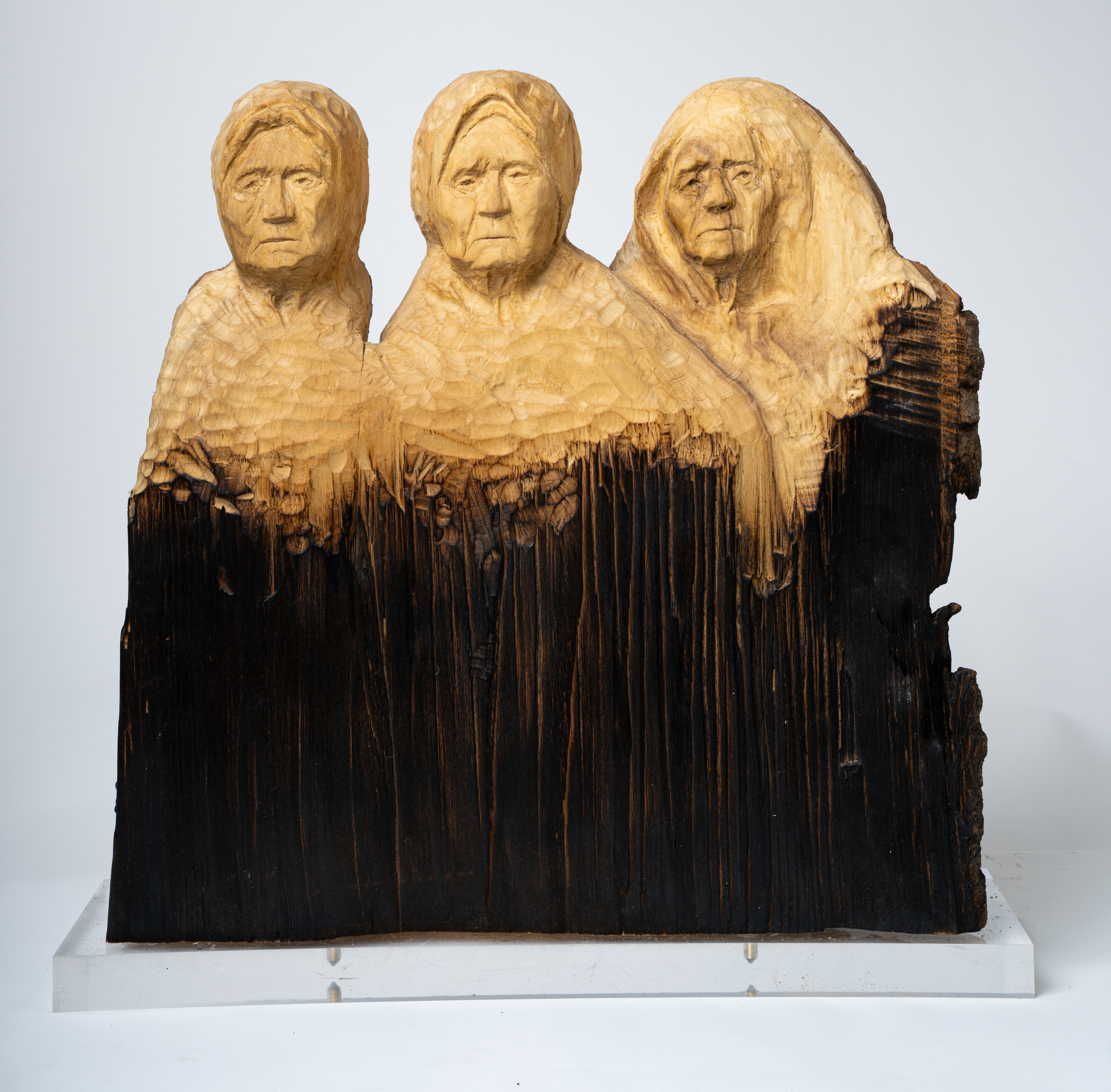
The sculpture Las Madres, refers to the Mothers of the Disappeared in Argentina, who became a powerful symbol of resistance in the Dirty War (1976-1983). But it focuses on a subject I have also thought about for a while, the killing of our young. Las Madres translates sadly too well, as we see the mothers of these children facing the cameras with a mix of fierce determination, anger, and profound sorrow.
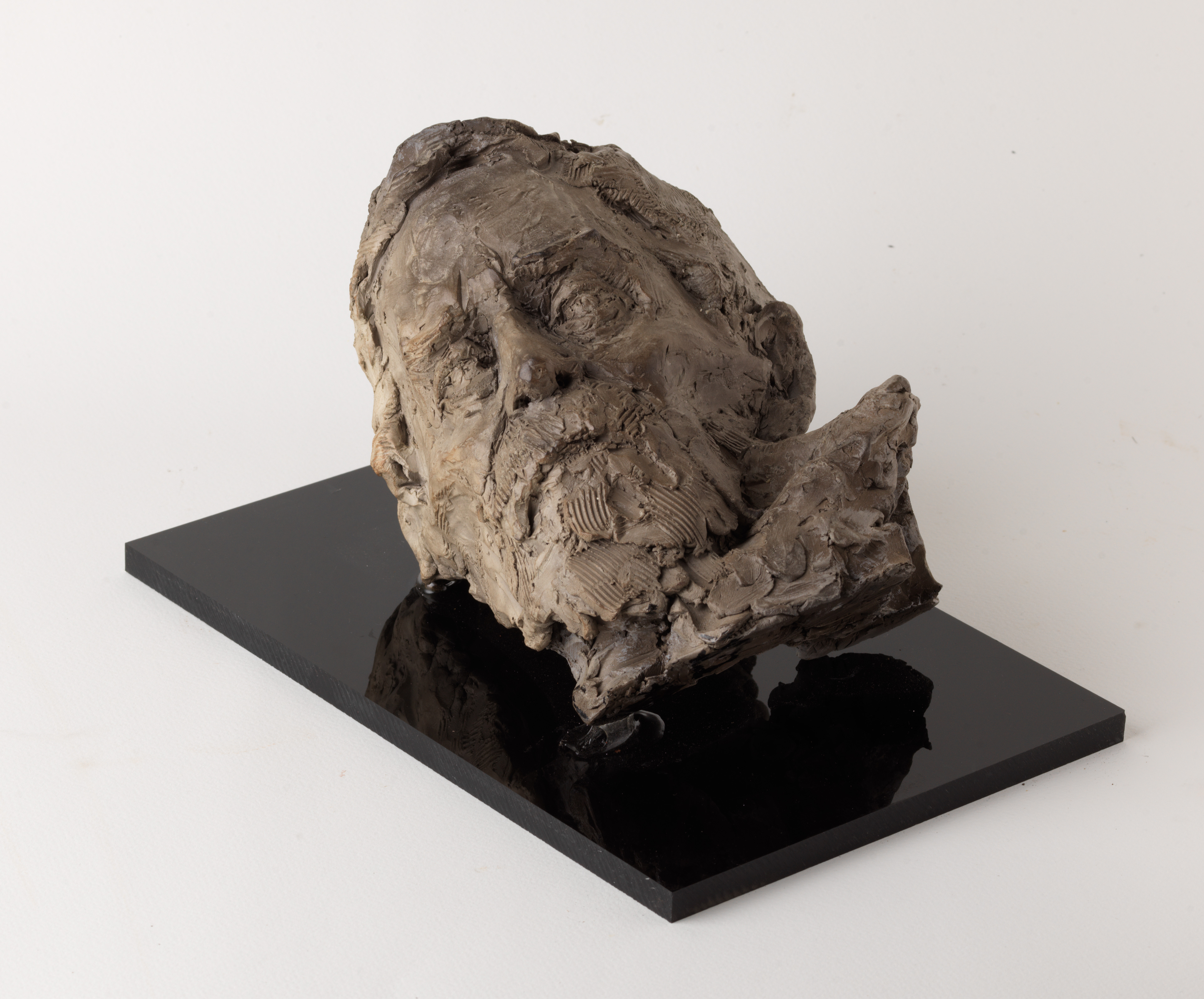
I should leave by talking about one more sculpture, Ozymandias, which refers to the poem by Percy Shelley, written in 1818 (or 1819), and warns of the ethereal nature of power, a warning that could, and should, be well heeded today. (And reminds me of “Planet of the Apes”….Hoping not an omen.)
I met a traveller from an antique land
Who said: Two vast and trunkless legs of stone
Stand in the desart.[d] Near them, on the sand,
Half sunk, a shattered visage lies, whose frown,
And wrinkled lip, and sneer of cold command,
Tell that its sculptor well those passions read
Which yet survive, stamped on these lifeless things,
The hand that mocked them and the heart that fed:
And on the pedestal these words appear:
“My name is Ozymandias, King of Kings:
Look on my works, ye Mighty, and despair!”
No thing beside remains. Round the decay
Of that colossal wreck, boundless and bare
The lone and level sands stretch far away.
— Percy Shelley, “Ozymandias”, 1819 edition[16]