June 19 – August 1, 2026
Opening Reception: Friday, June 19, 6-8 PM
In-person Artist Talk: Friday, July 10, 6:30 PM
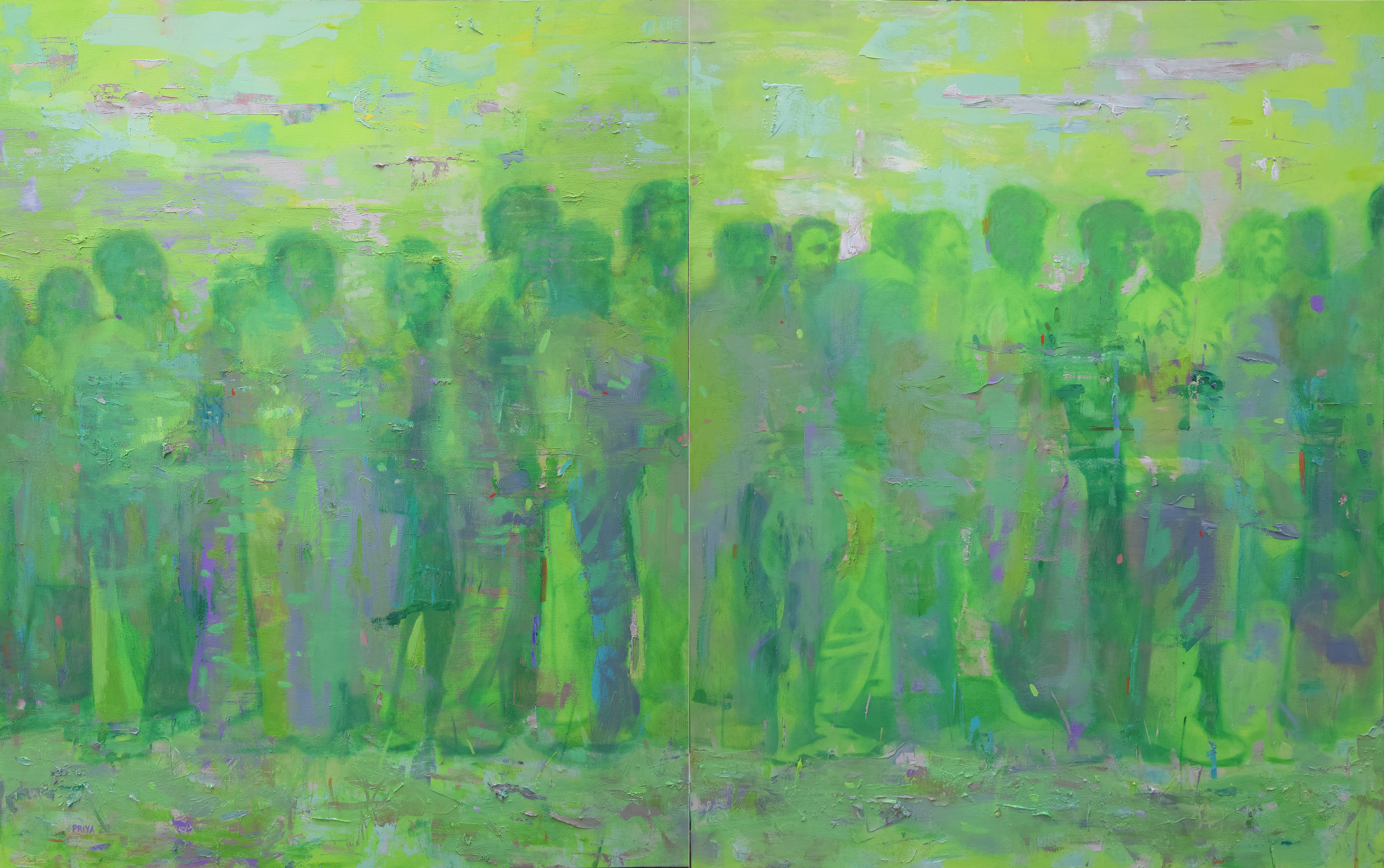
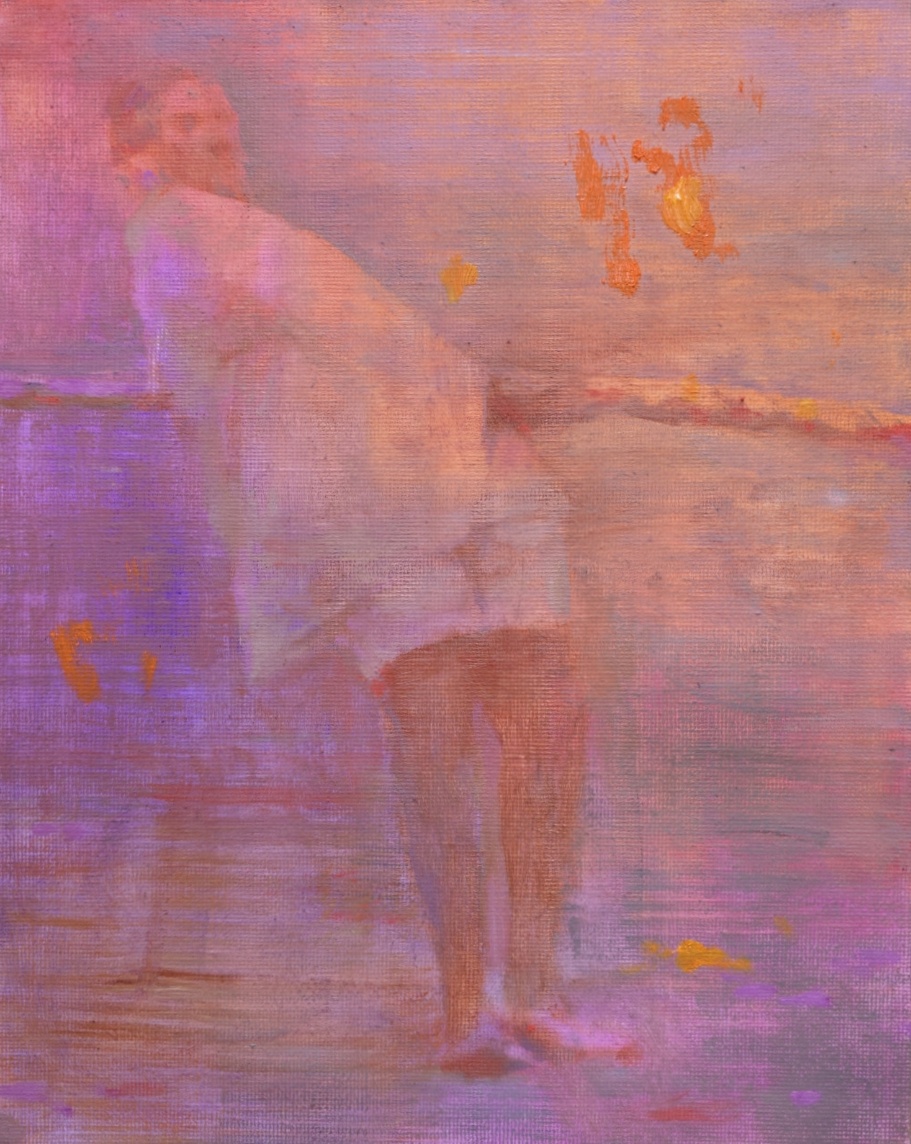
Recently, I’ve been exploring stills from Indian cinema. This has been inspired by my late grandfather, my ajju, who was an artist, journalist and screenwriter for Bollywood in India during the 80’s and 90’s. Our yearly visits across the globe were always marked by talking about creating, looking and making. My grandfather recognized my affinity towards artmaking from an early age and encouraged me to pursue it seriously. So this exploration is an homage and memorial to him. I still remember the way that he talked passionately about how to light and arrange objects. He made the act of looking come alive for me. Growing up in America, I never watched Indian movies due to a strong language barrier–the language of my family was different than the one spoken in movies. Never having watched the movies my ajju worked on, I began watching them on youtube decades after his death– a very surreal experience that poked at the illusions of time, technology, language and distance. This work became a visual exploration of the work of my grandfather and seeing the world through his eyes.
Painting, a language unto itself, becomes a way to speak all the incommunicable things found in these films and photographs that belong to a certain place and time. And in painting them, they become mine.
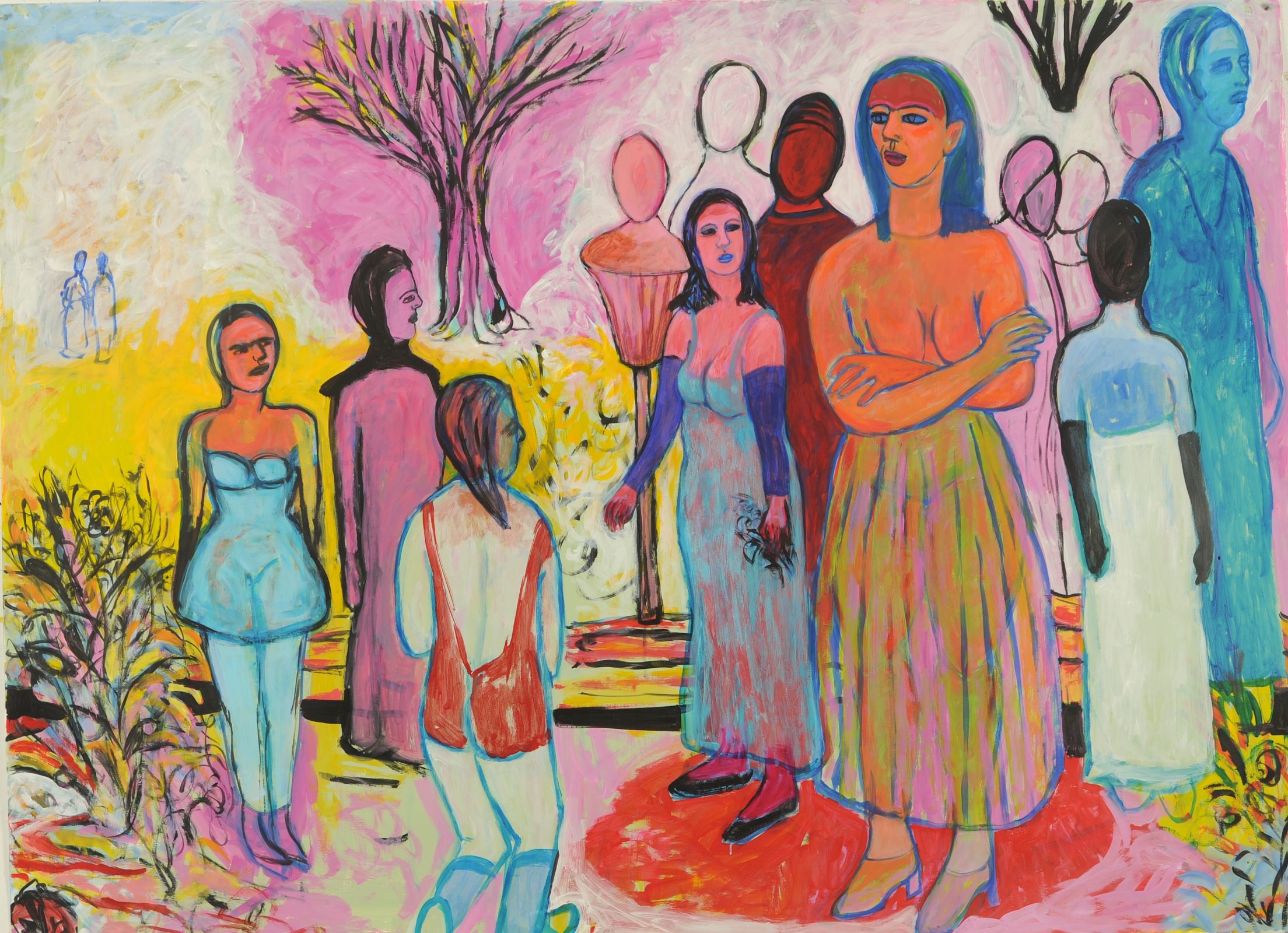
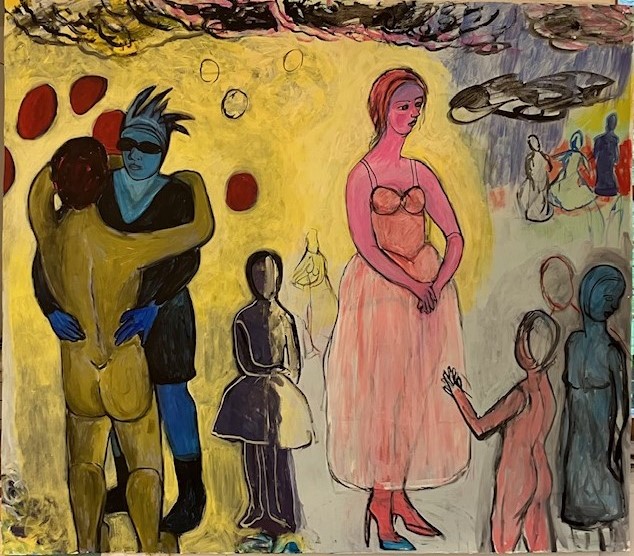
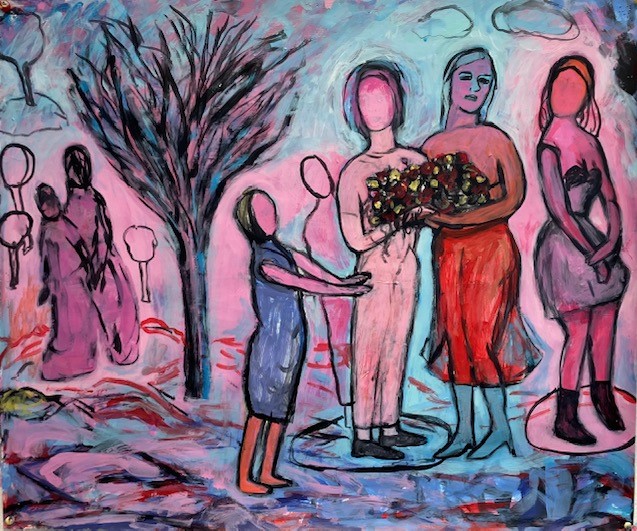
Using the figure as a focus, my paintings investigate the complexity of relationships and the range of human emotion, delving into oppression, conflict, and violence. The work chronicles a struggle that embraces despair, moves through anger, and ultimately arrives at revelation, proving that despite our fragility and vulnerability, we are capable of great courage and strength.
Fueled by my own journey to overcome obstacles, the work is rich with symbolism and layered with personal history. Loose gestural strokes first define representational forms. Surfaces are energized and agitated, creating interaction and dialogue. Some areas become more rendered, providing insight, while others are obscured. The current series is very large, making my practice highly physical as I interact with the work, and affording me a great sense of freedom.
I am a woman born into rupture. My practice is shaped by exile, memory, and resistance—rooted in my experience as an Iranian American living in exile. In my work, the personal and political are inseparable, and I place myself—my voice, my body, my inner life—at the center of the narrative.
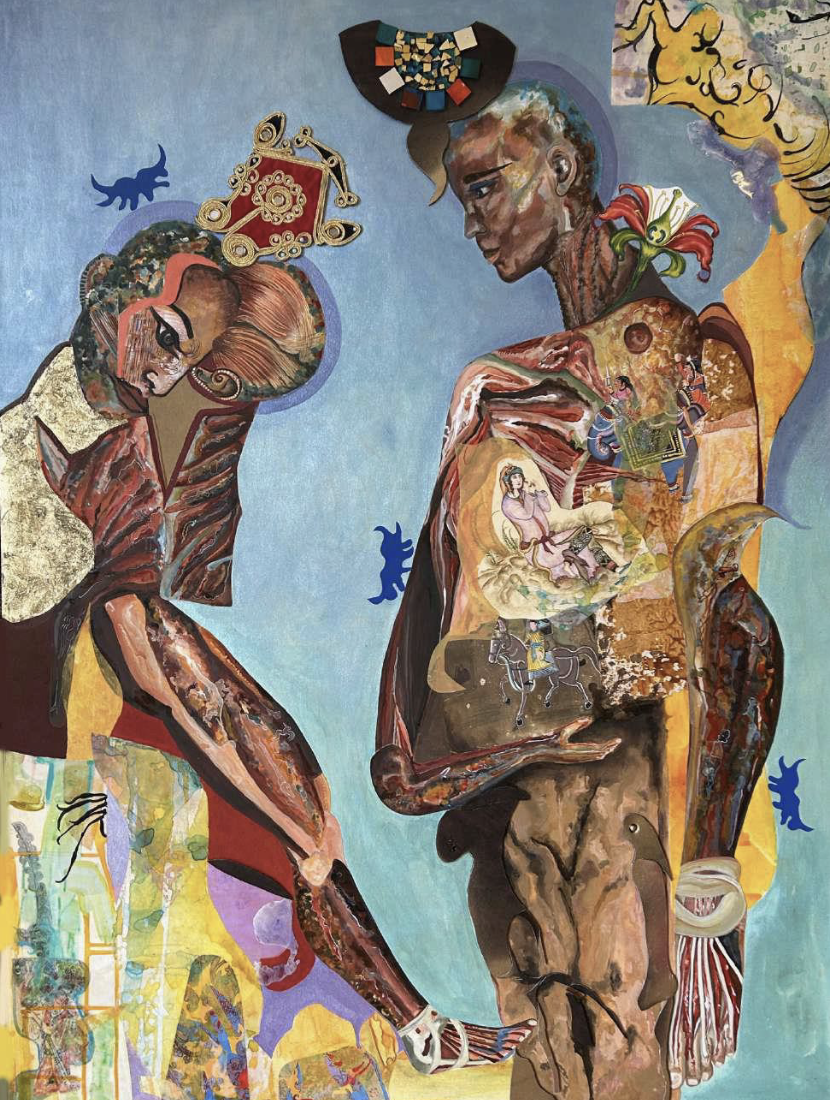
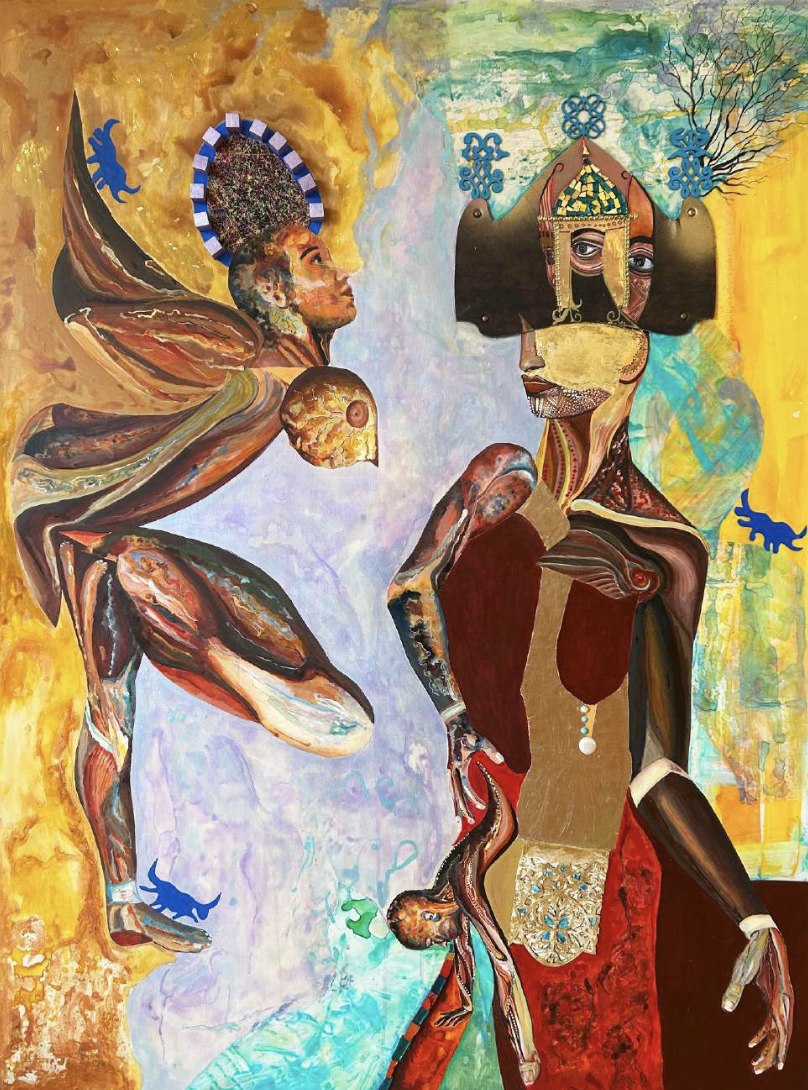
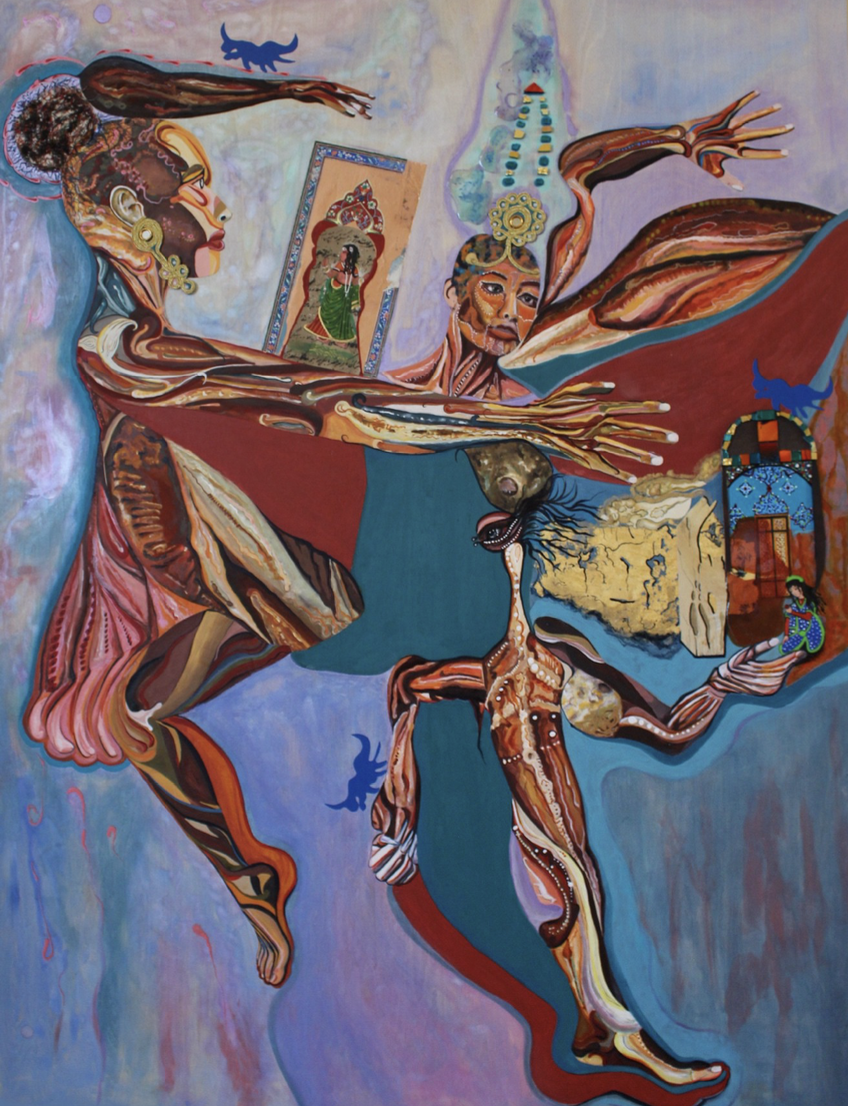
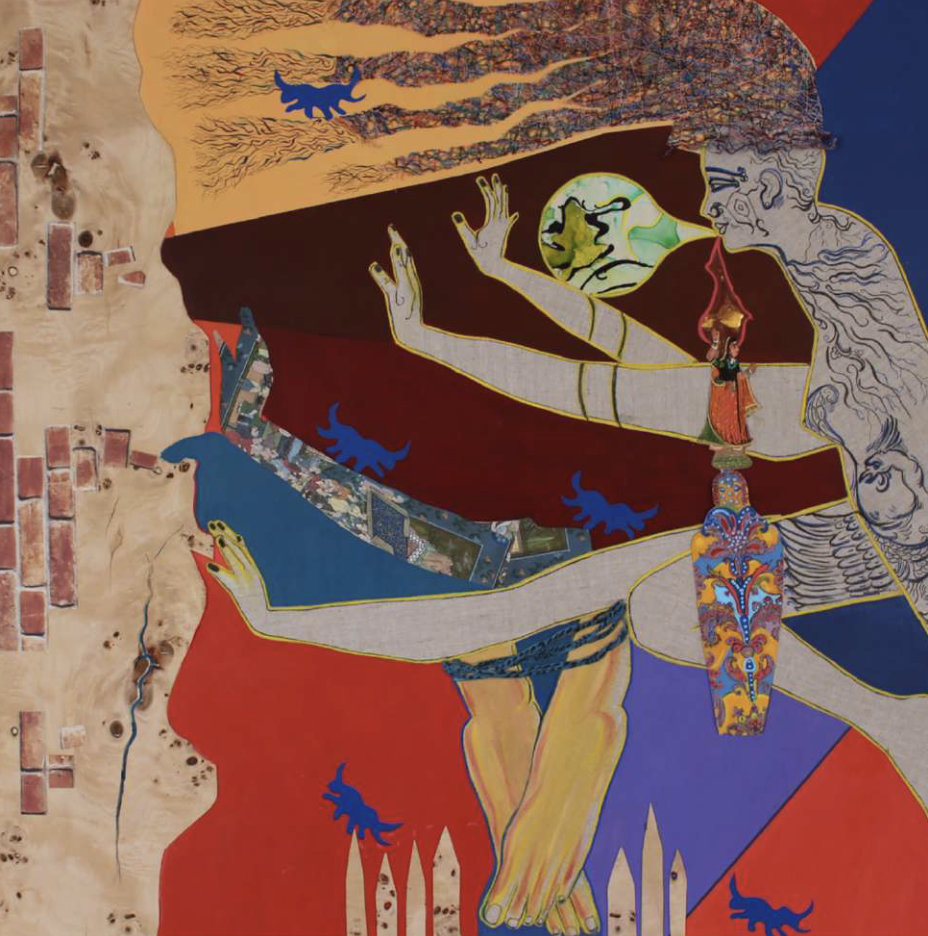
The female body is the primary site of my inquiry: not as a fixed or resolved form, but as something unstable and continuously becoming—shaped by memory, emotion, and identity in constant formation. Through fragmented anatomical imagery, poetic inscription, and layered material, I make visible the emotional and psychological terrain of womanhood. Vulnerability is not concealed here; it is the very substance of the work.
The women of the Persian epic Shahnameh—long silenced or rendered peripheral—are not distant figures to me. I see myself in them. Their courage, pain, and power mirror my own experience of dislocation, desire, and resilience. My practice reinterprets these mythological presences, situating them within contemporary dialogues of memory and representation, revealing how female identity is constructed and perpetually reshaped through cultural narrative.
My recent work turns inward, tracing intimate landscapes through mythic, anatomical, and symbolic form. I create spaces where hidden truths emerge and the unheard are finally voiced—where ancestral myth and personal history merge into one living image, and where fragmentation becomes not a wound, but an act of rewriting.