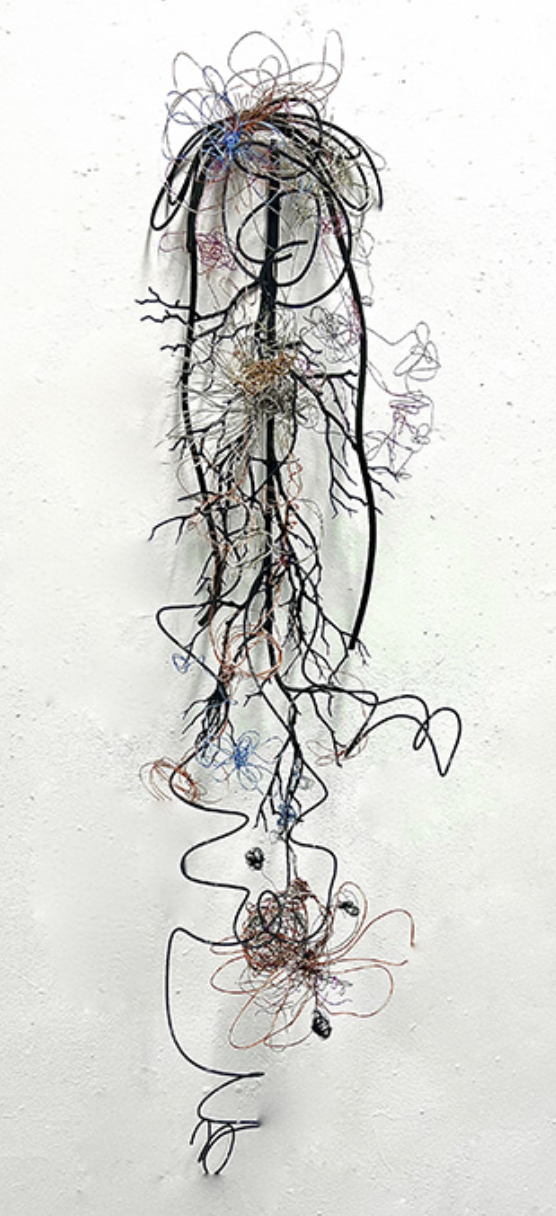
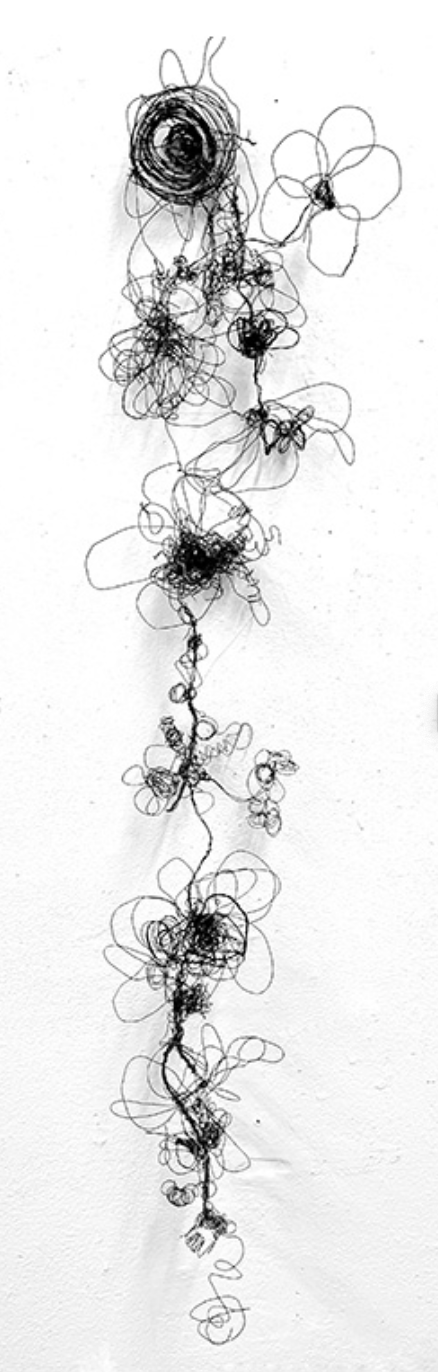
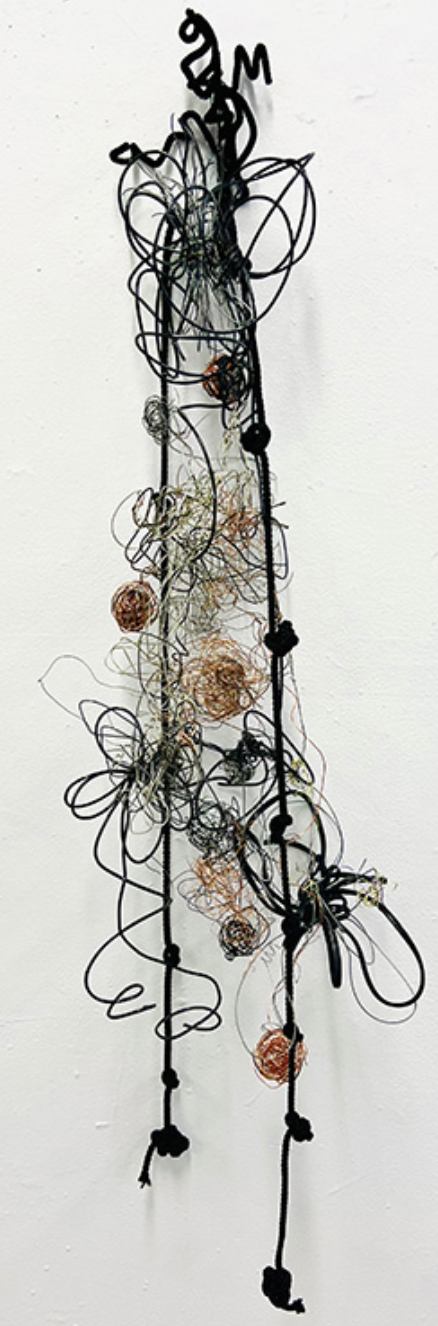
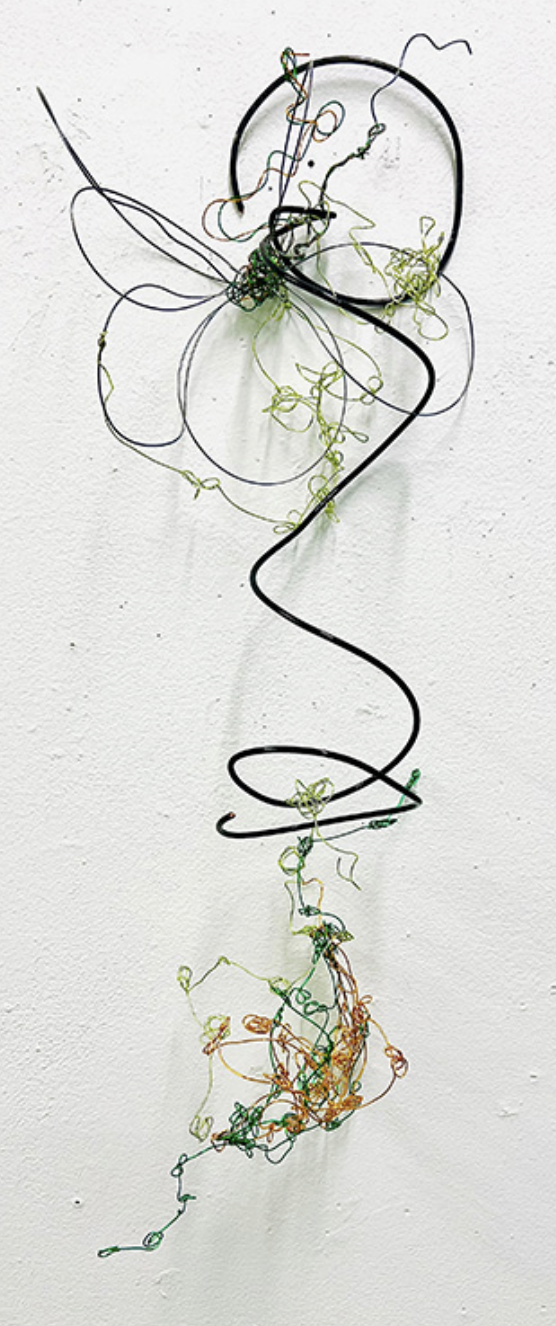
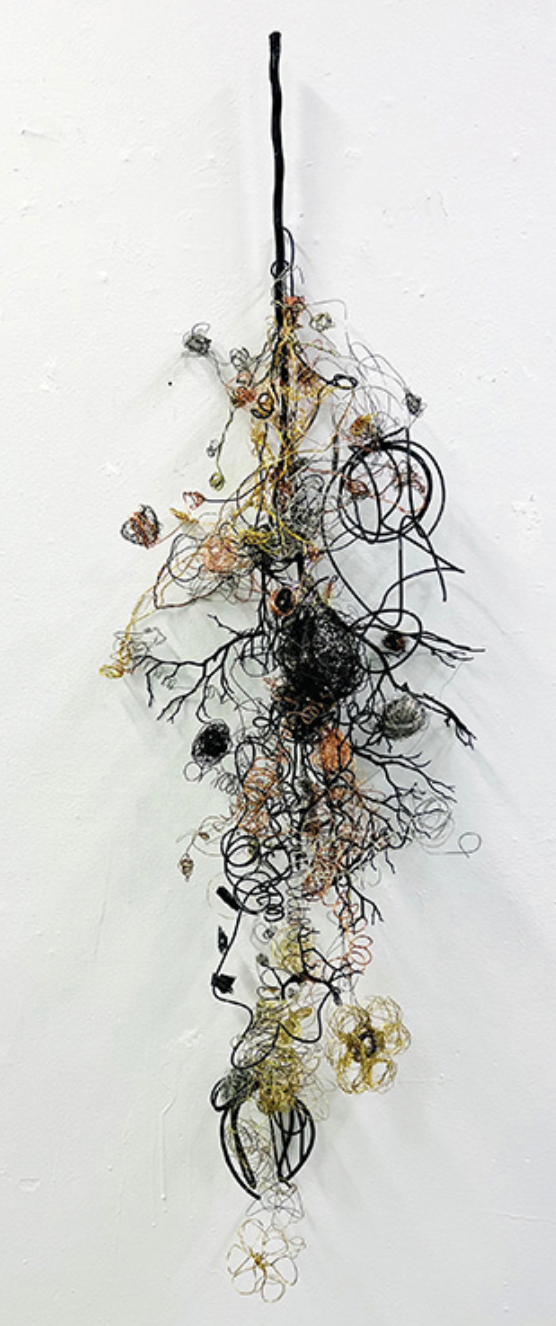
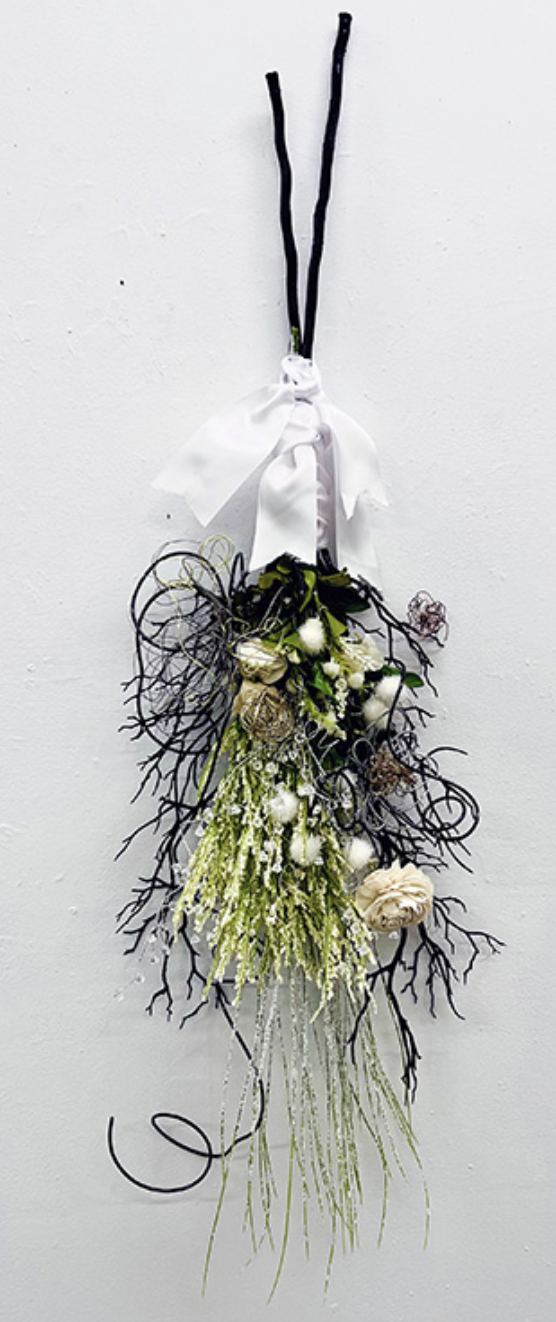
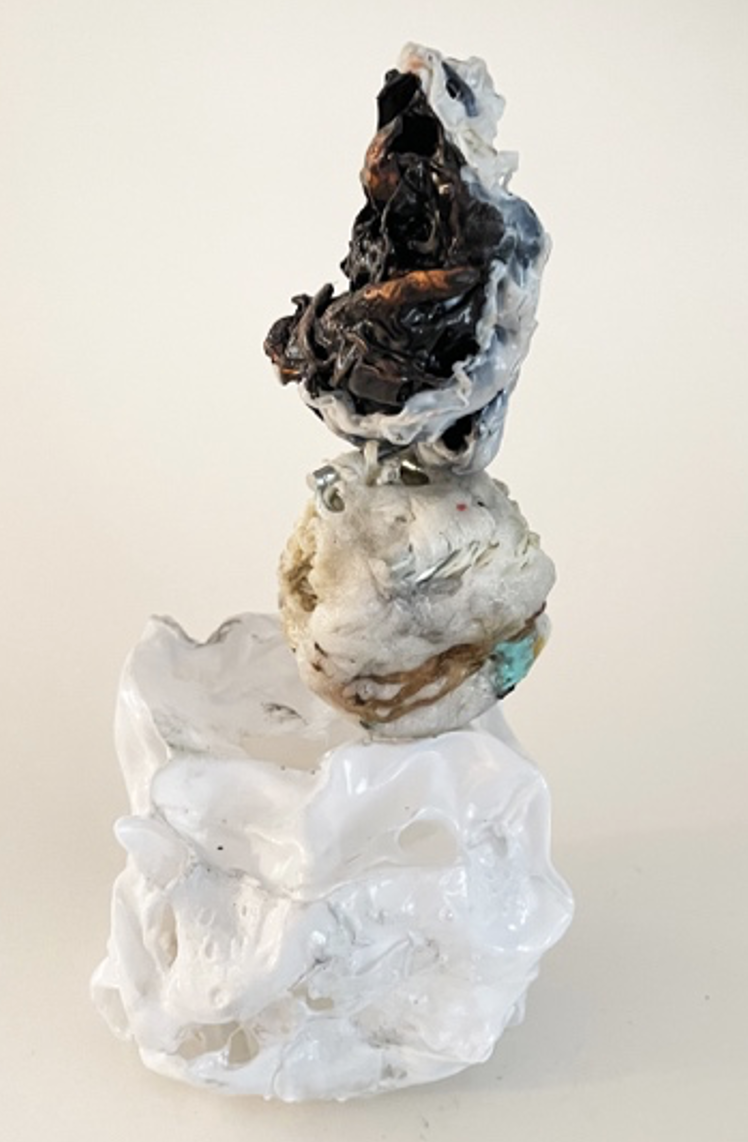
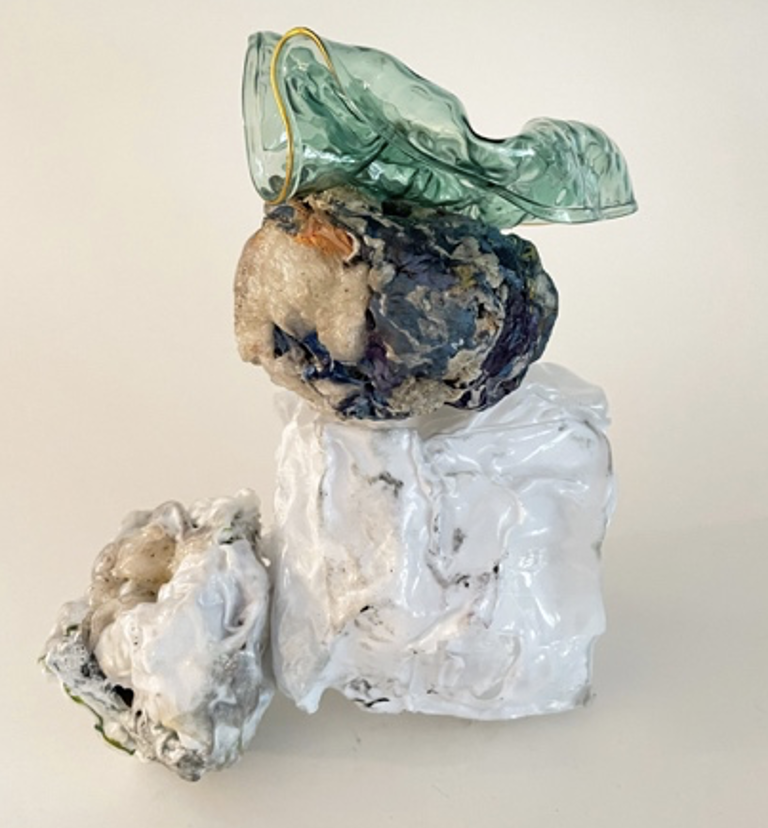
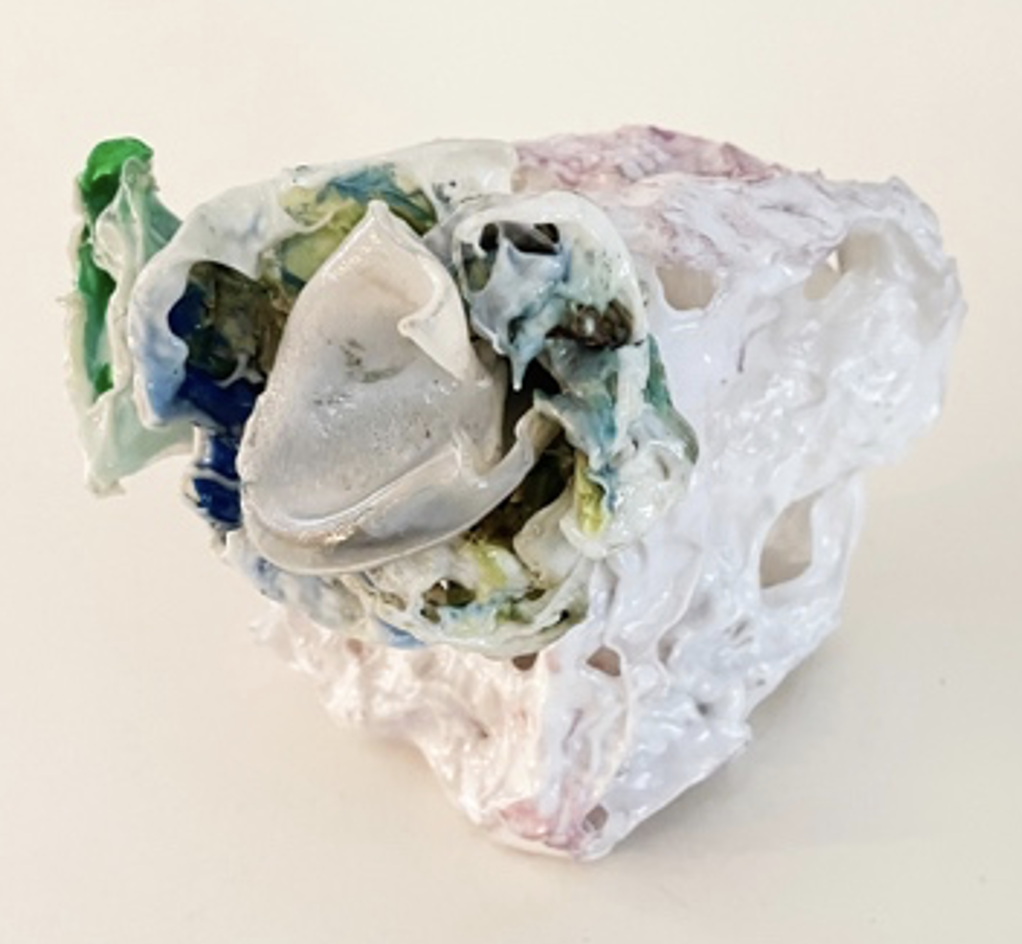
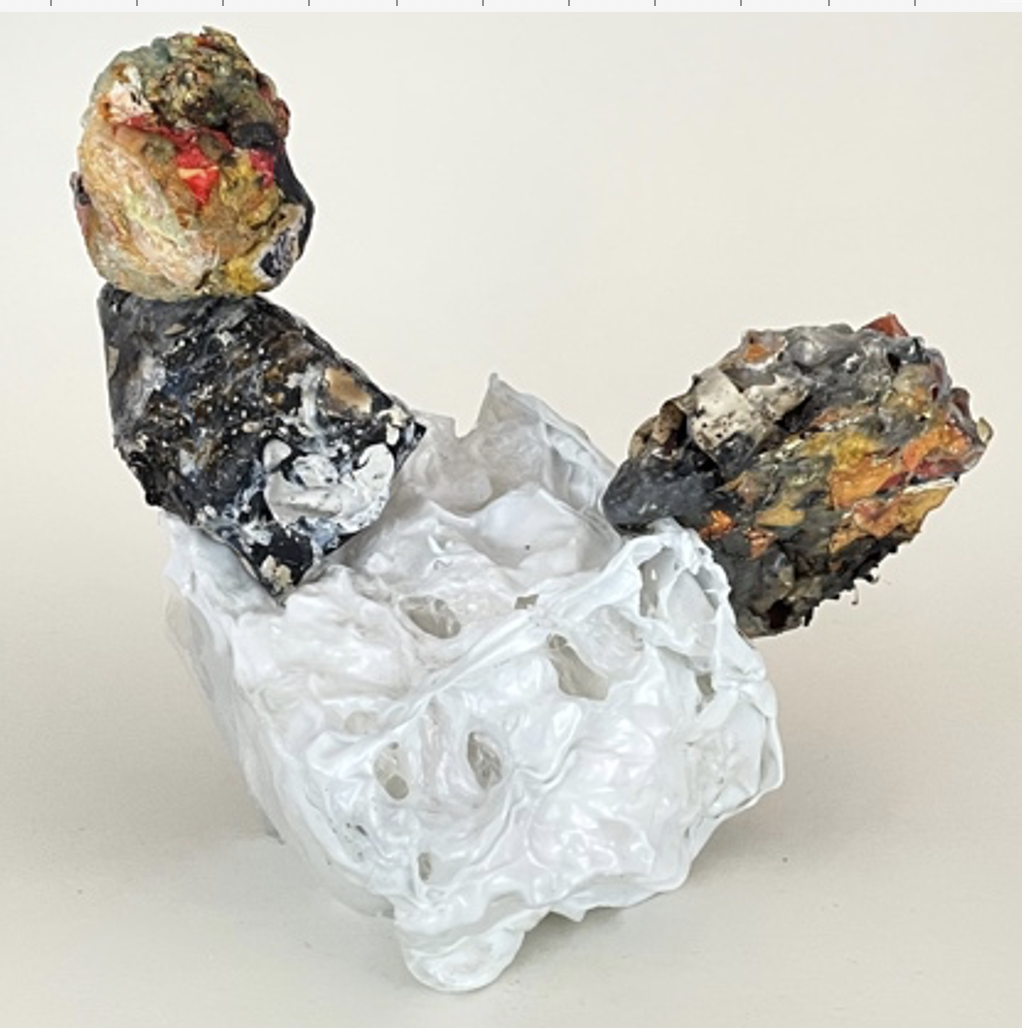
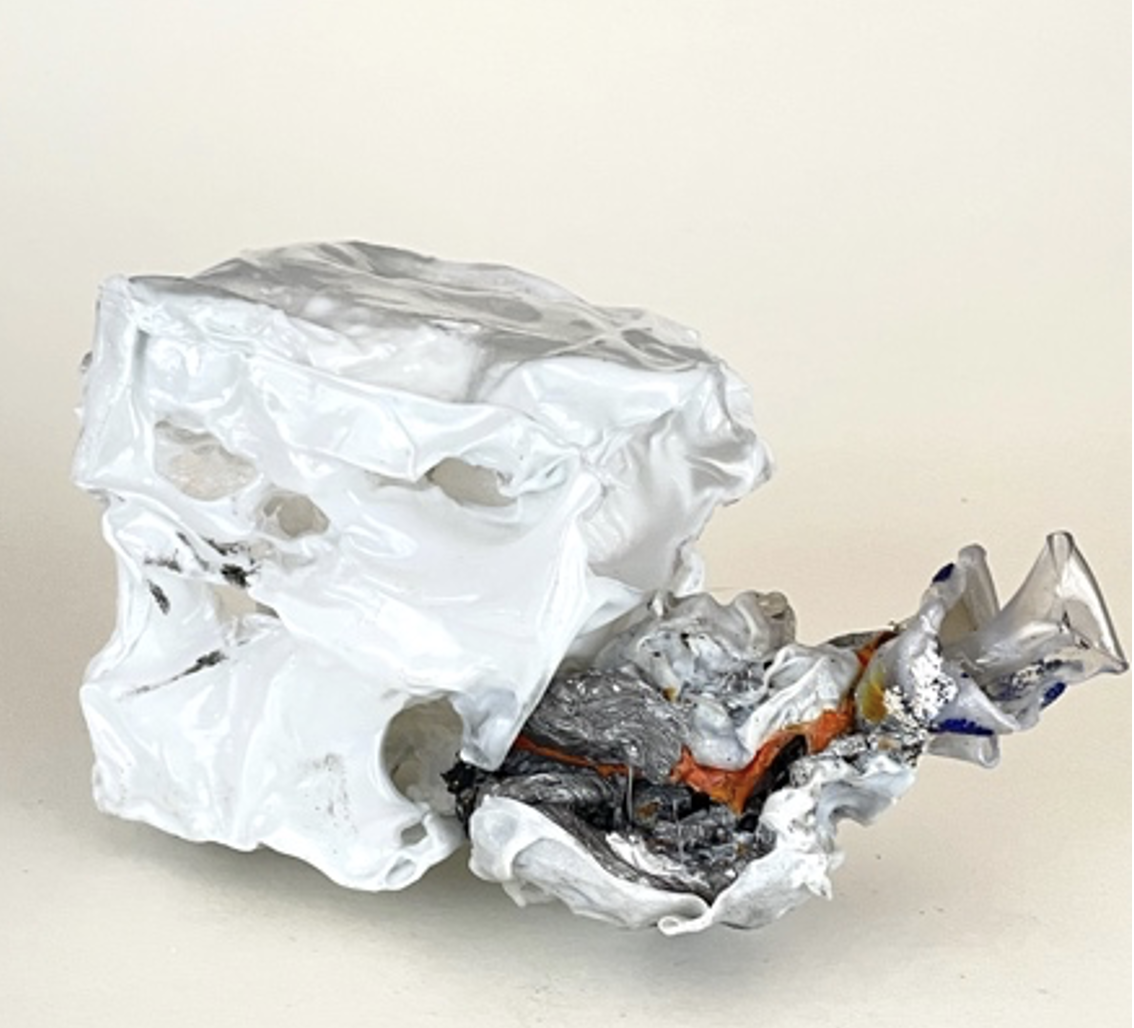
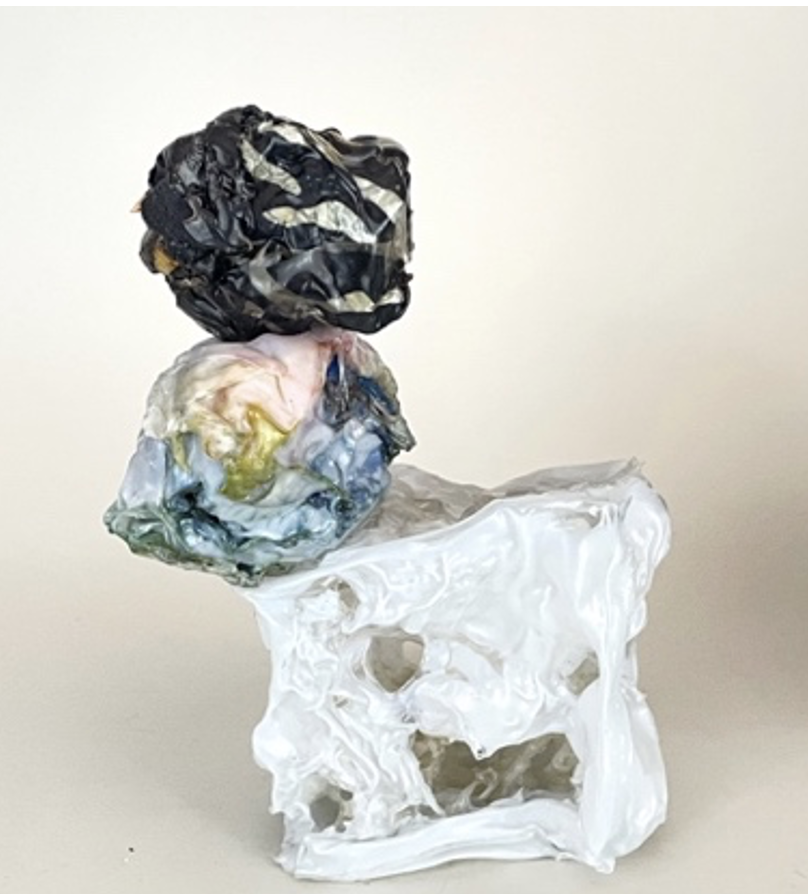
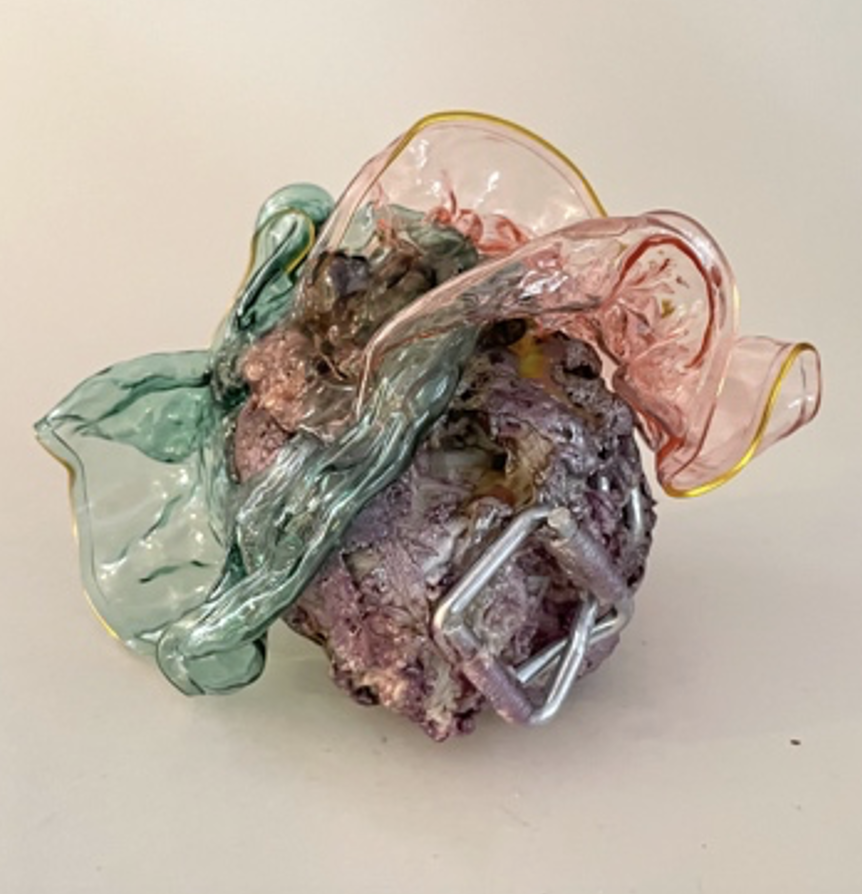
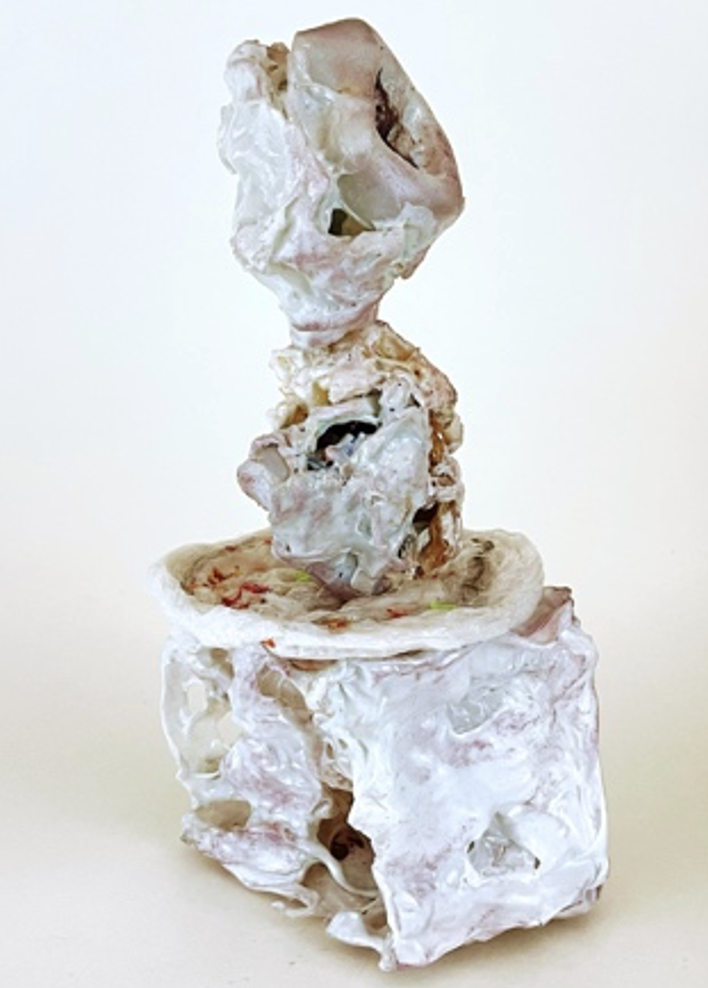
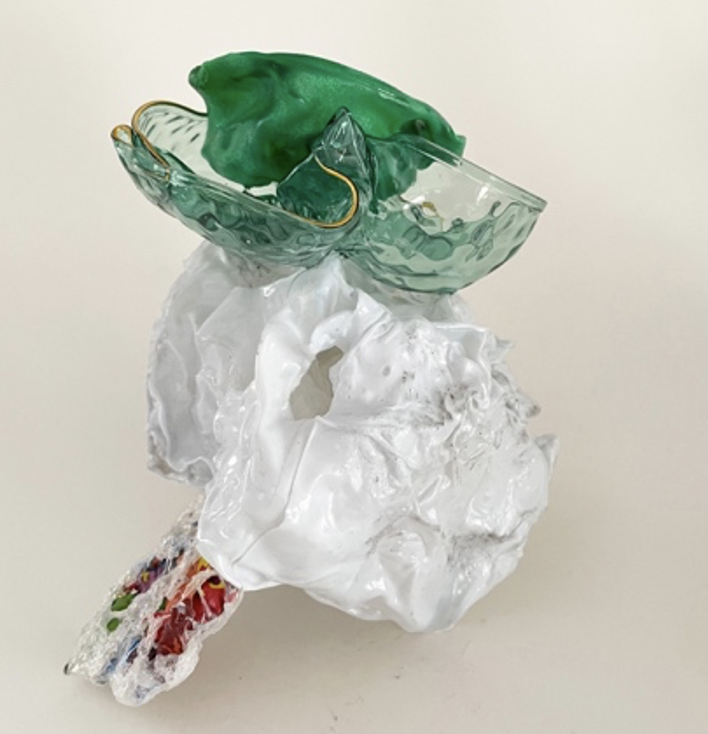
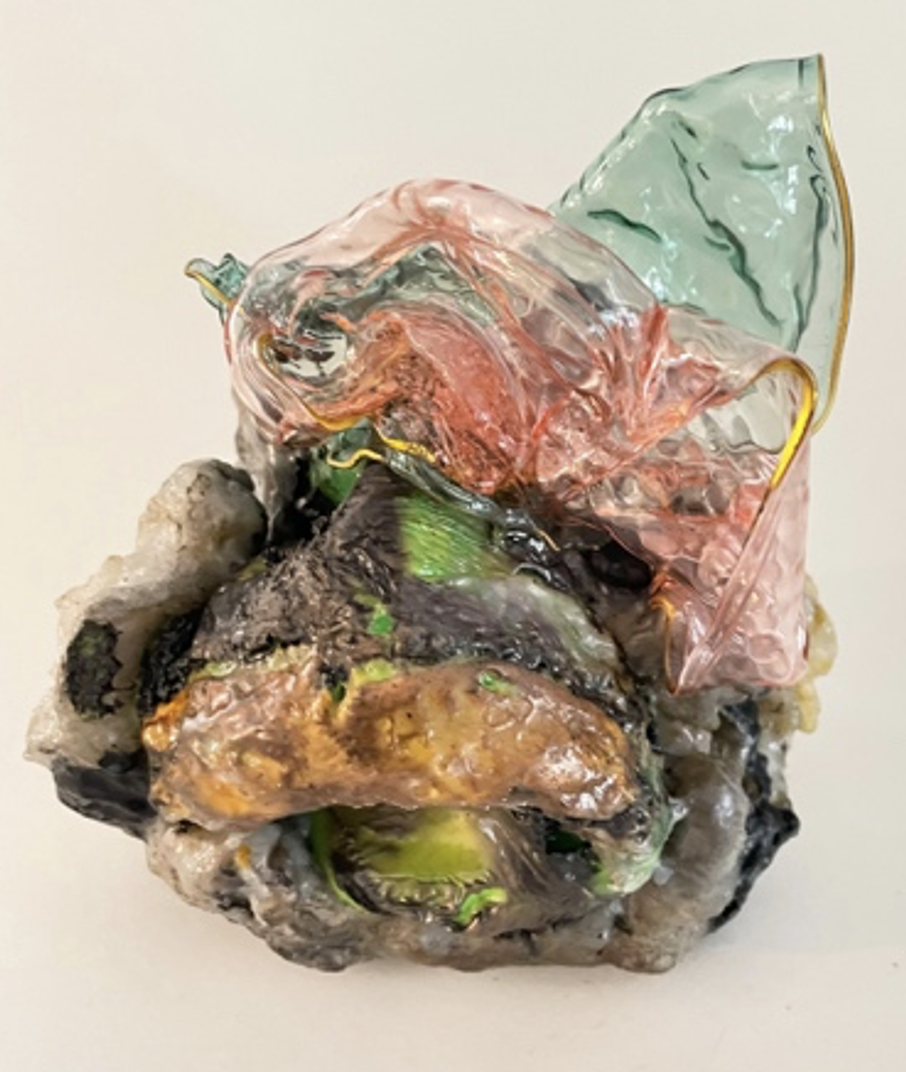
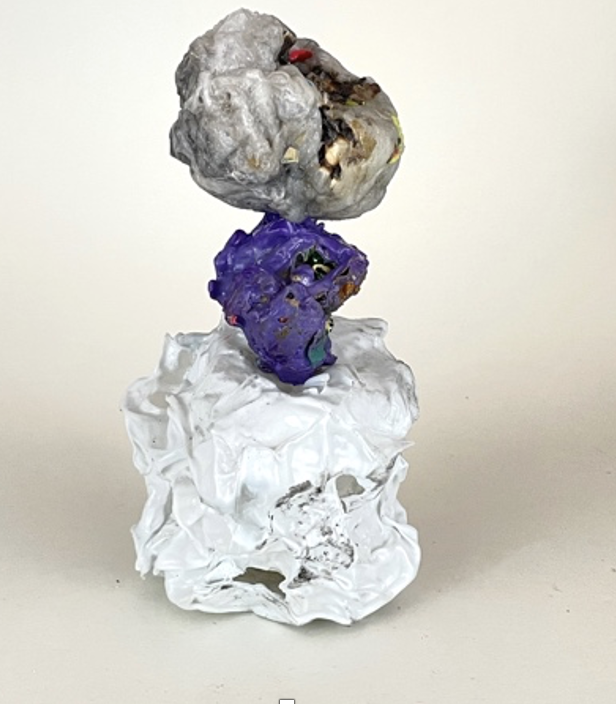
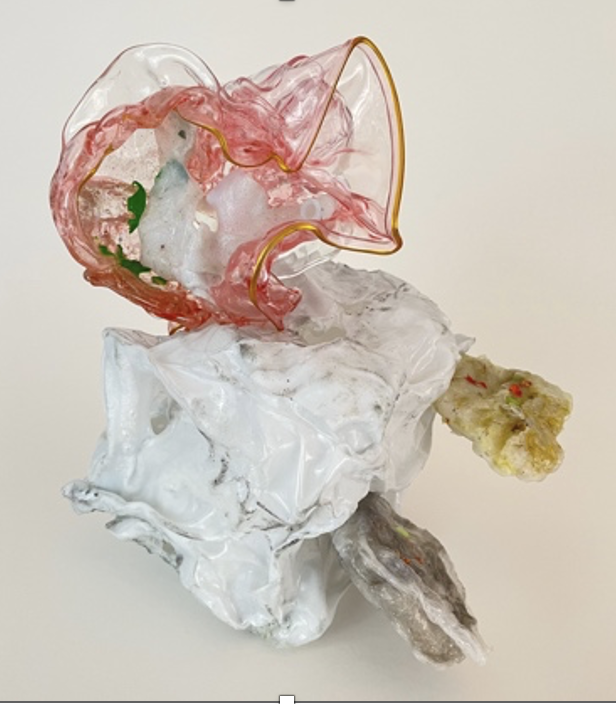
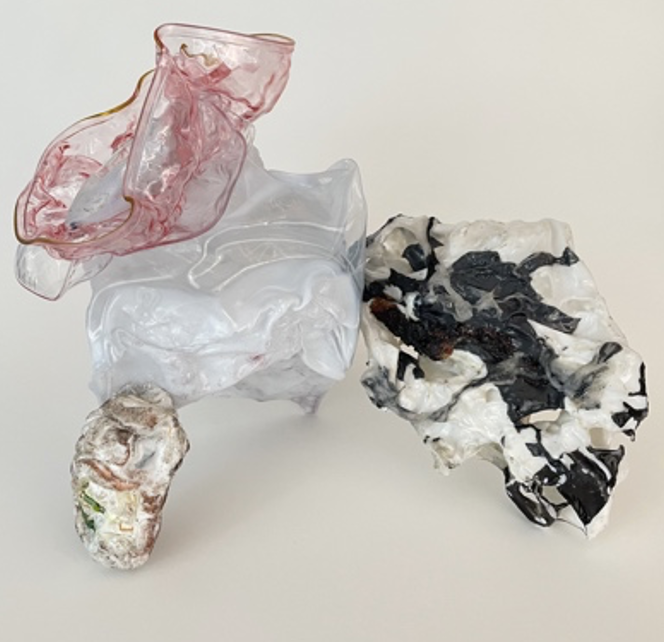
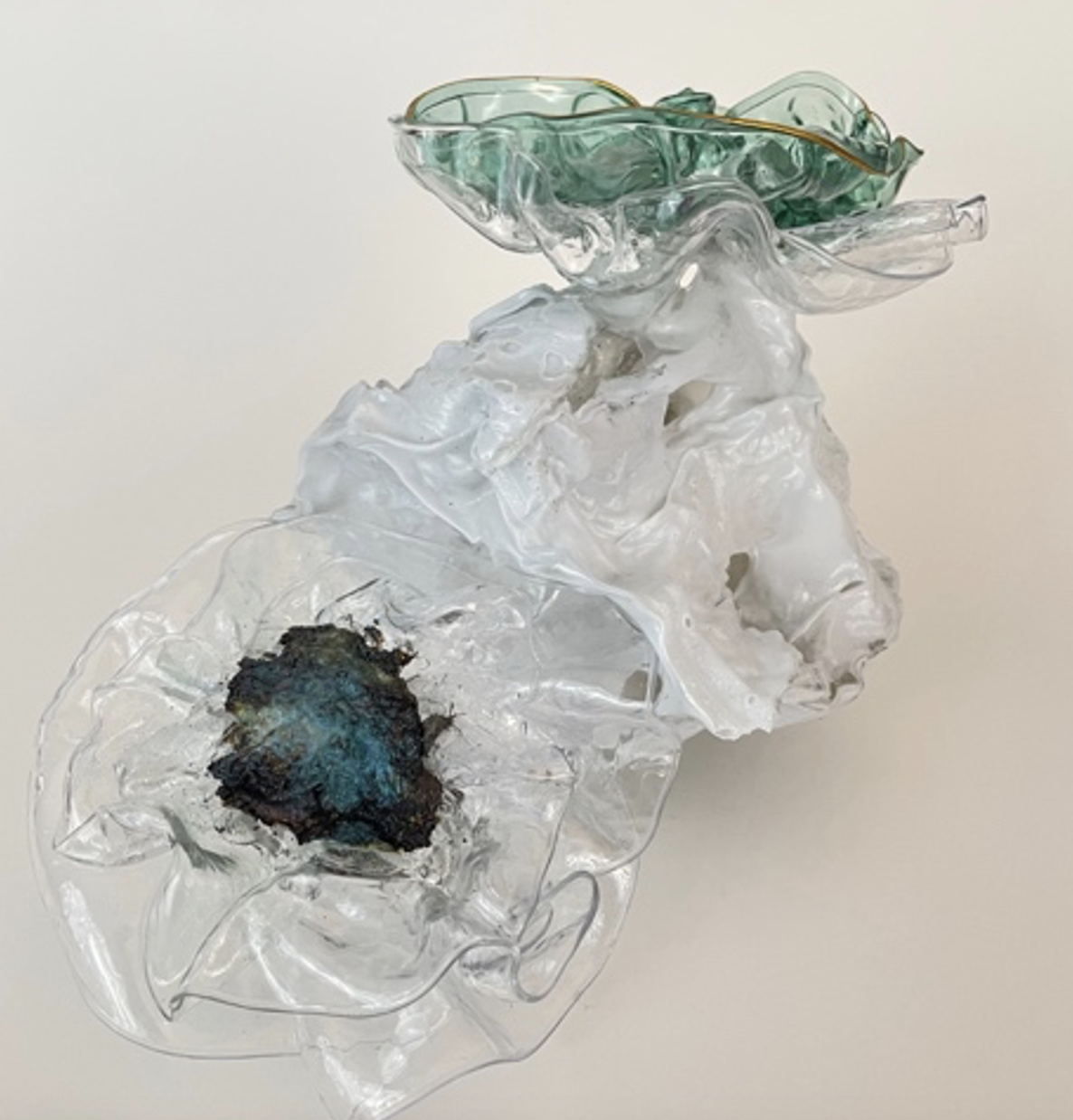
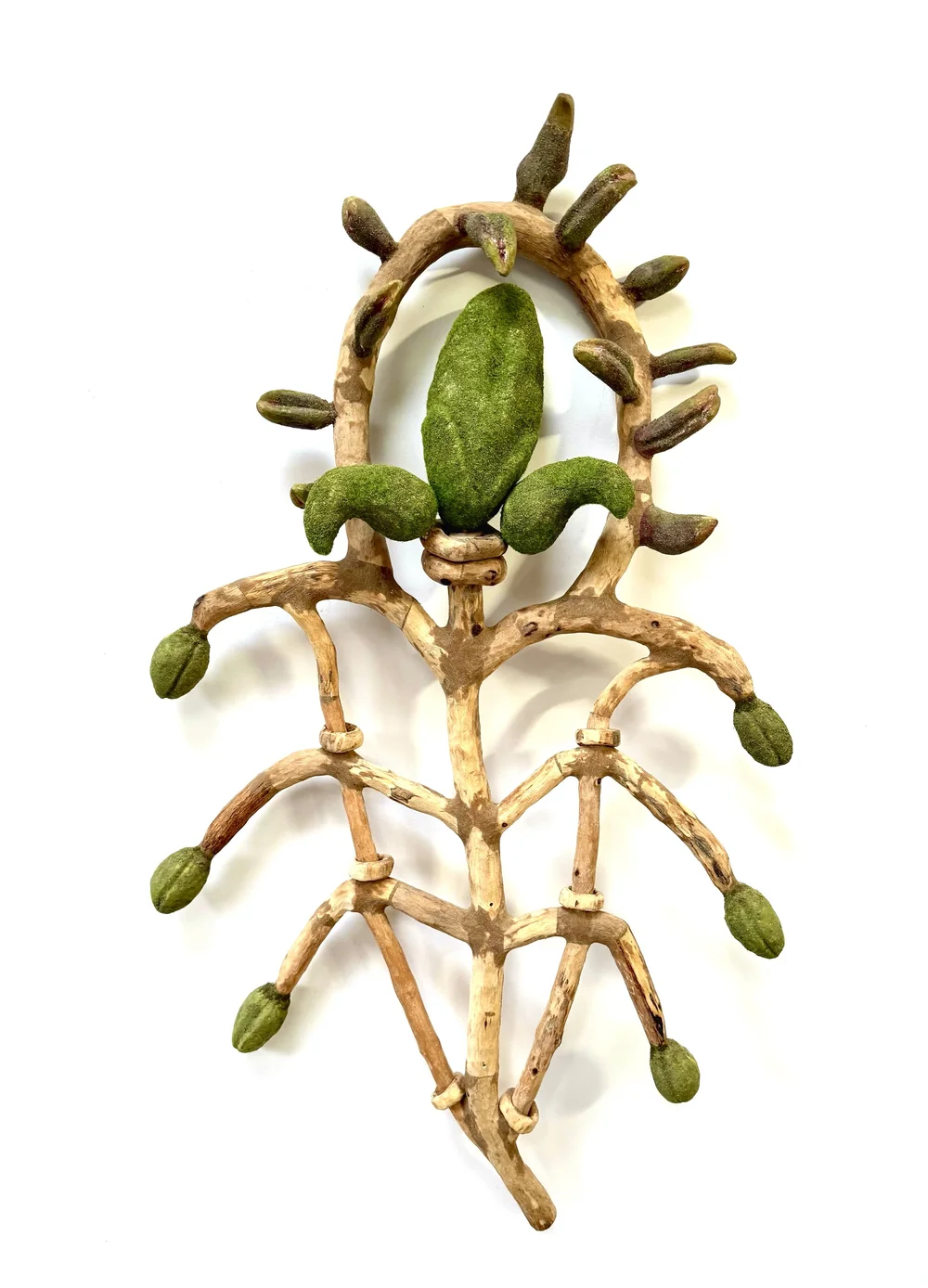
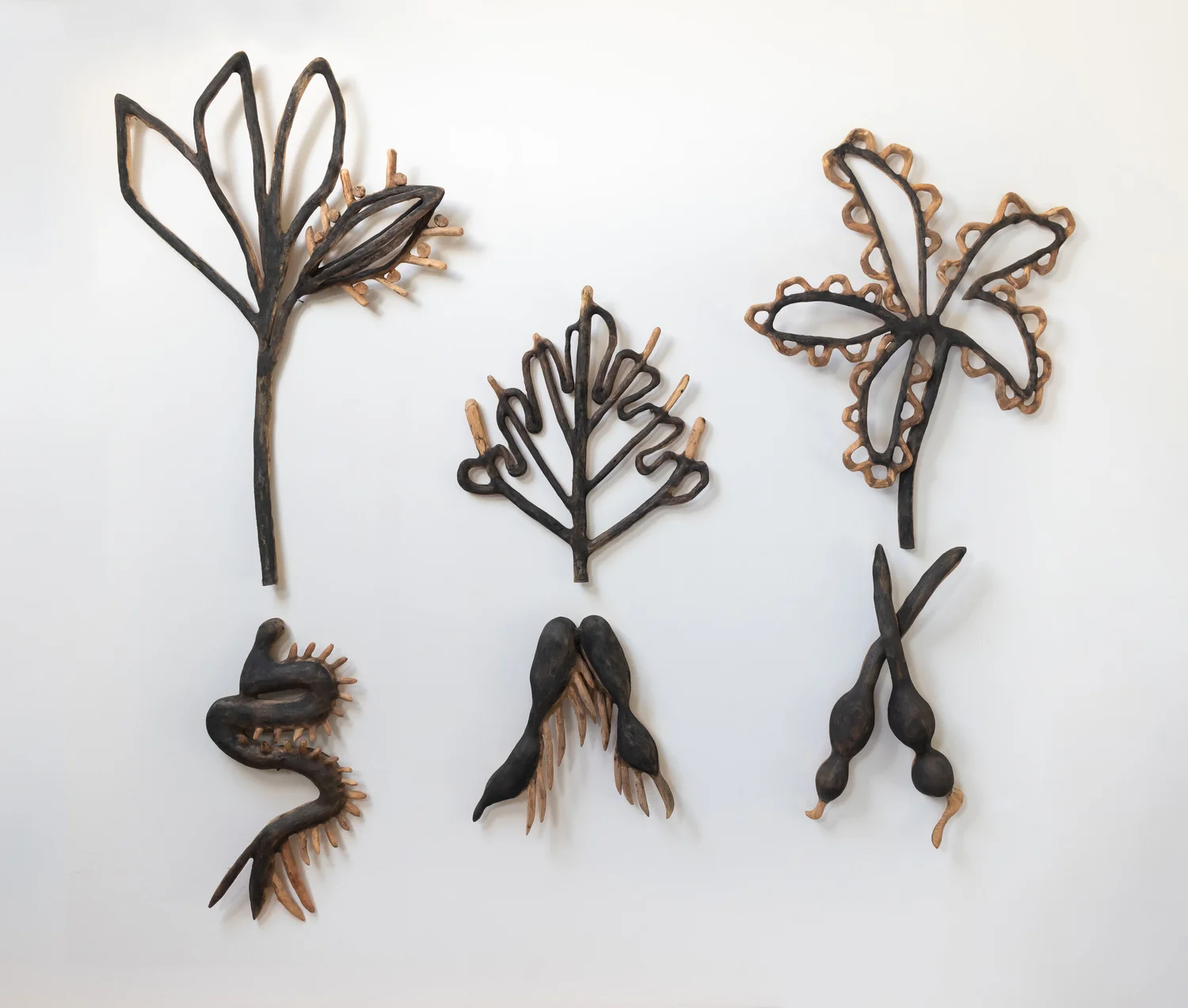
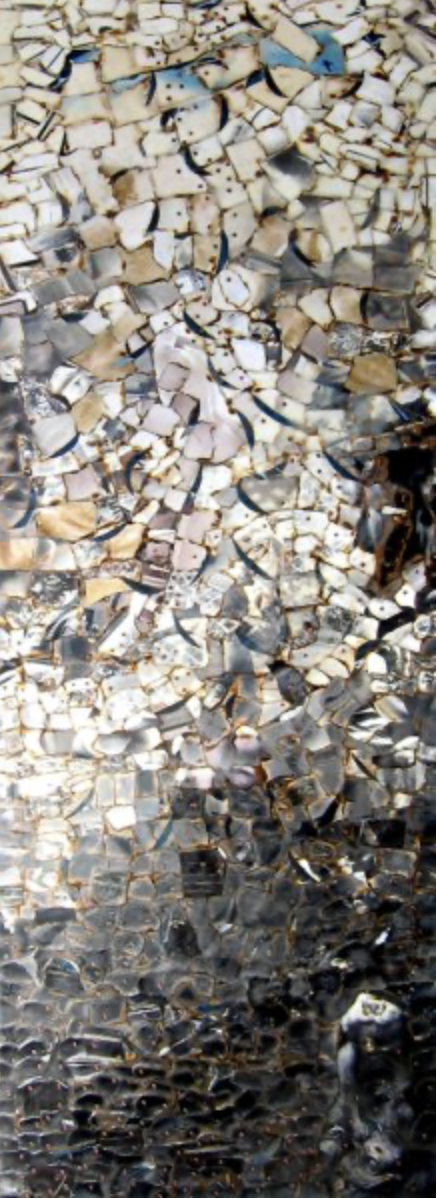
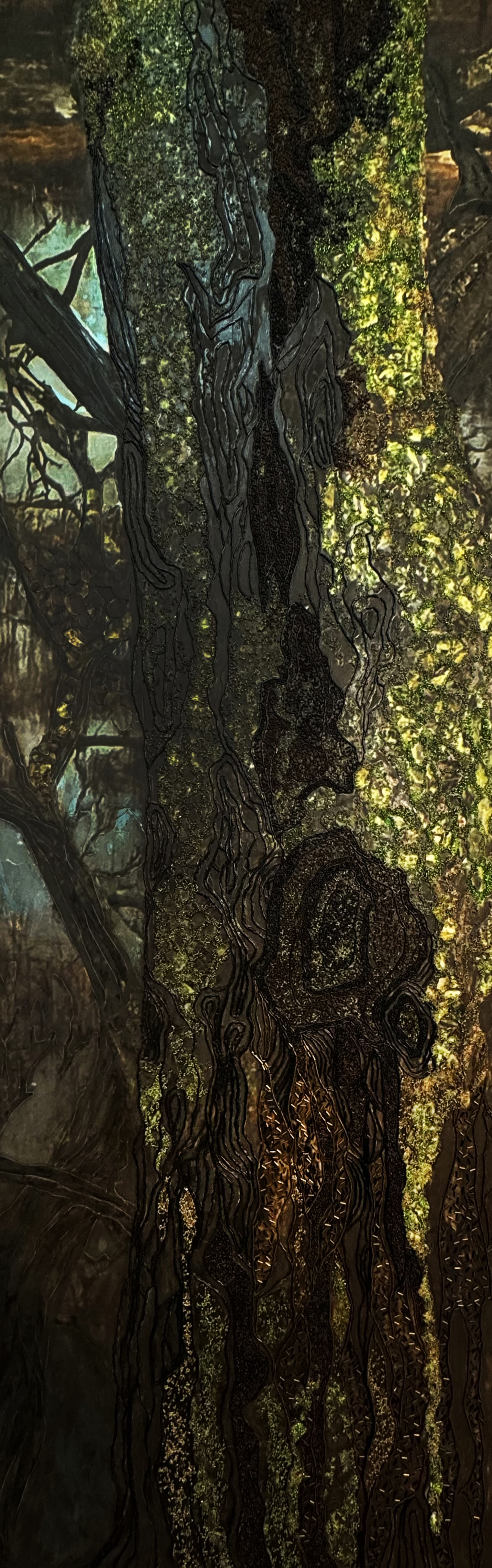
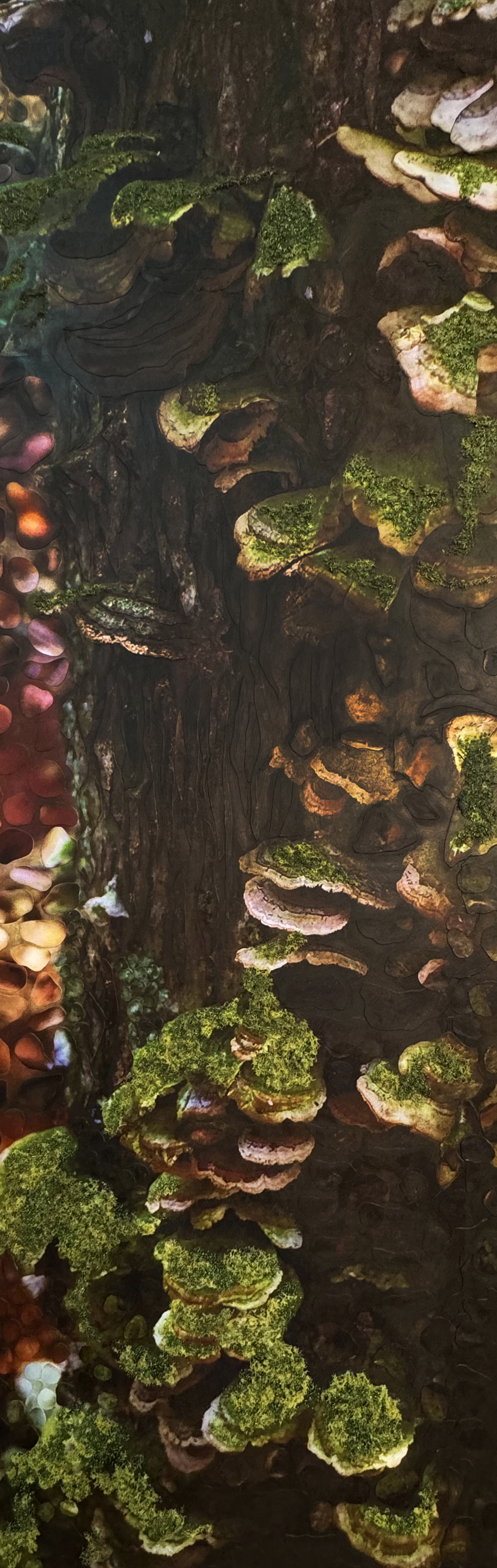
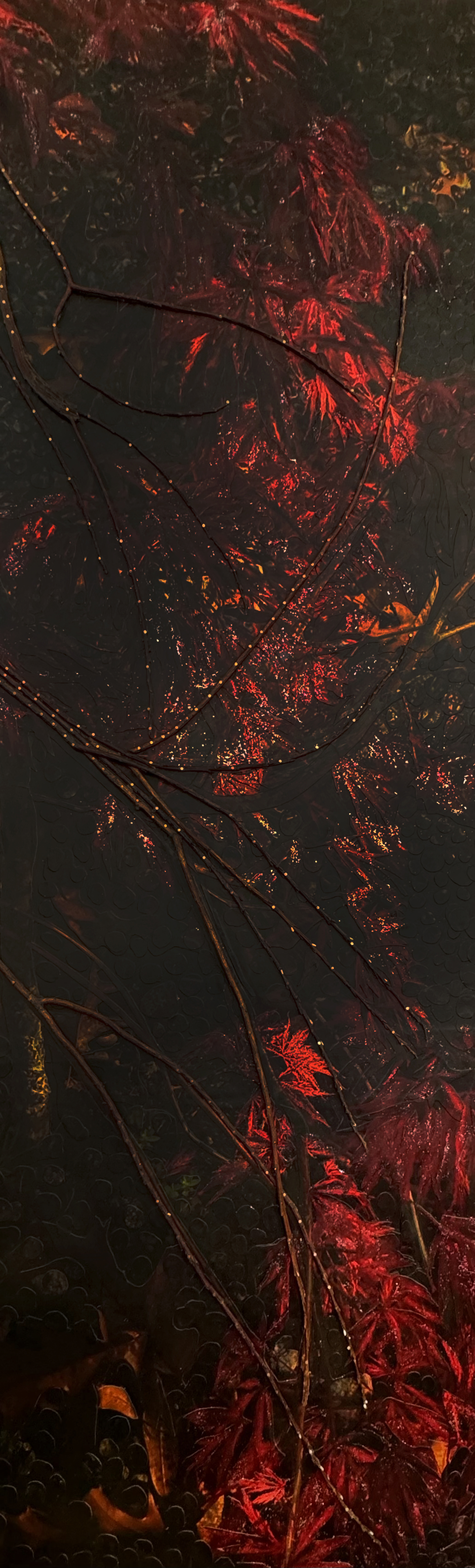
Forever Flowers emerged from my reflection on how grief from gun violence lingers long after public attention fades. Flowers are traditionally offered as temporary gestures of remembrance but I wanted to make them permanent mirroring the impact of loss on families and communities. Their quiet beauty invites reflection while their stillness resists forgetting. This work is both remembrance and protest asking for care that endures beyond the moment.
“Plastic is found all over the surface of the earth, on beaches and farmer’s fields, as well as landfills, city sidewalks…our waterways, our bodies, as microparticles in the air we breathe, as well as in consumables such as fruits, vegetables, drinking water, seafood, beer and salt, where its effects have yet to be determined.
—Heather Davis from Plastic Matter
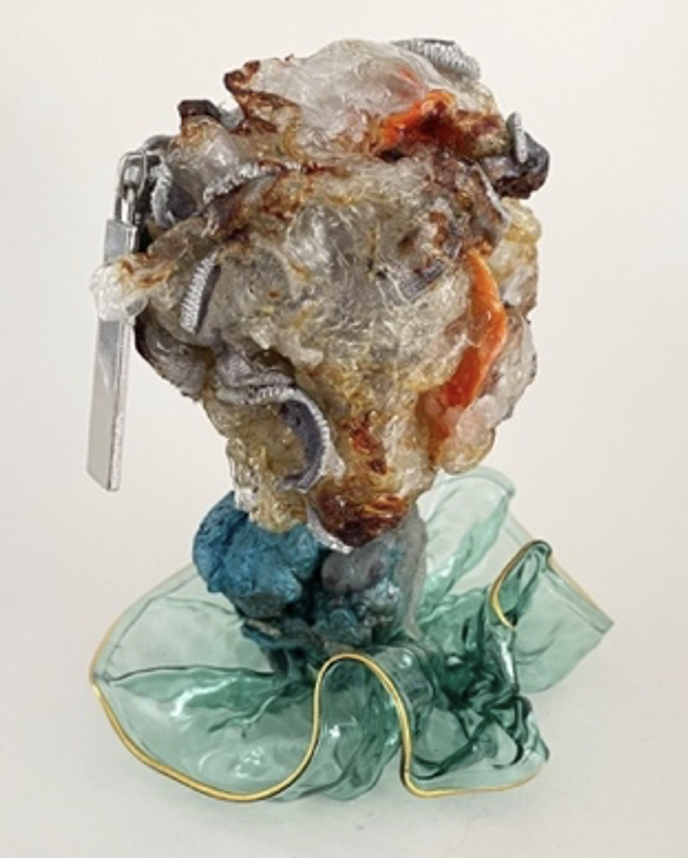
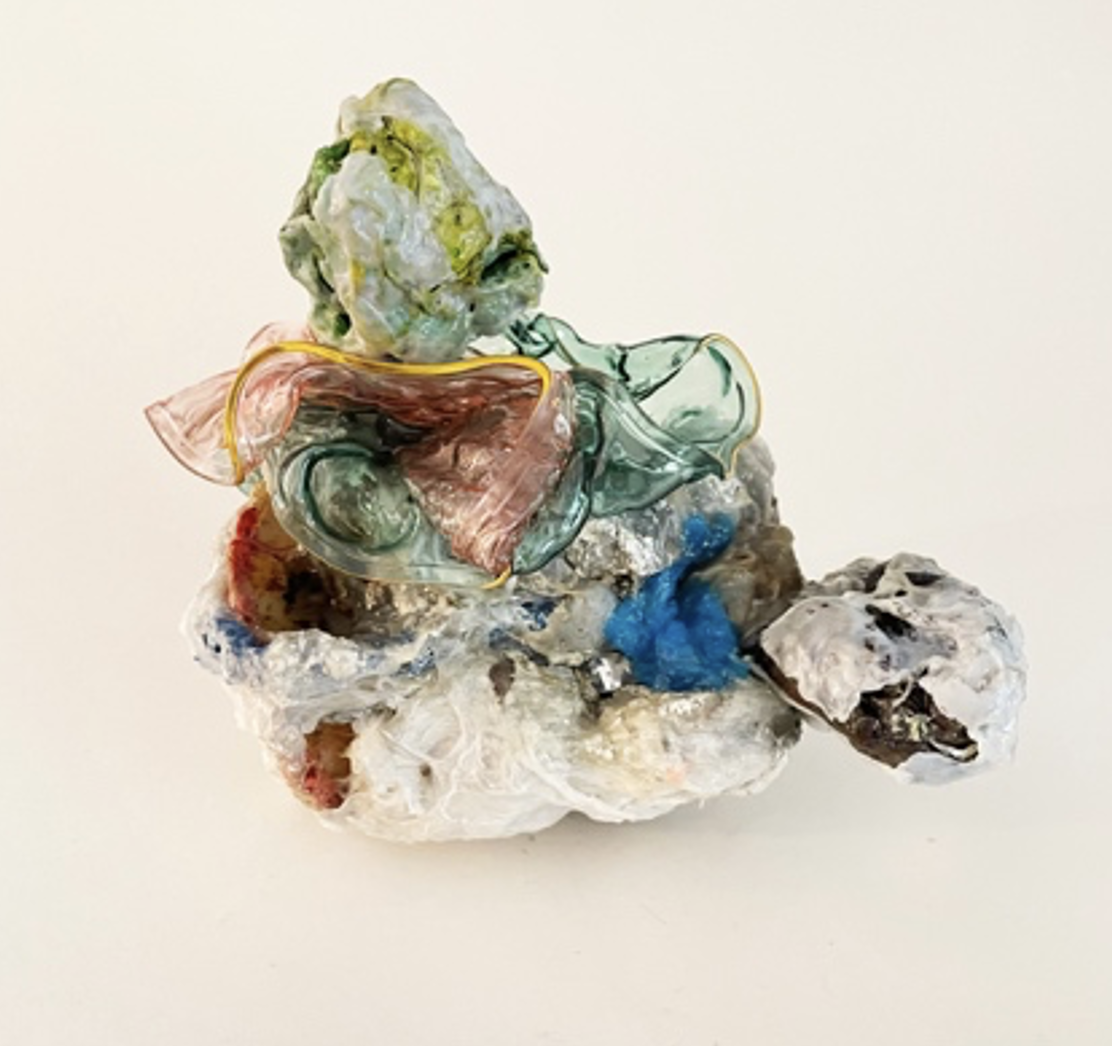
Scientists argue that the material plastic defines our current period within the Anthropocene. Humans will now be participants in the earth’s geological history through plastic infused stones known as plastiglomerates. This new stone, a composite fused with natural material from our oceans, such as shells, wood, coral, resulting in a plastic-rock hybrid, is becoming a permanent marker in earth’s geological record.
My plastiglomerates are made from the plastic waste I experience in my daily routines. Inspired by the idea of Zero Waste, I strive to live a life with minimal waste through a process of regeneration and transformation of everything I throw away examining how it can become resource material fostering ideas of sustainability and ecological awareness.
Kathleen Anderson, 2025
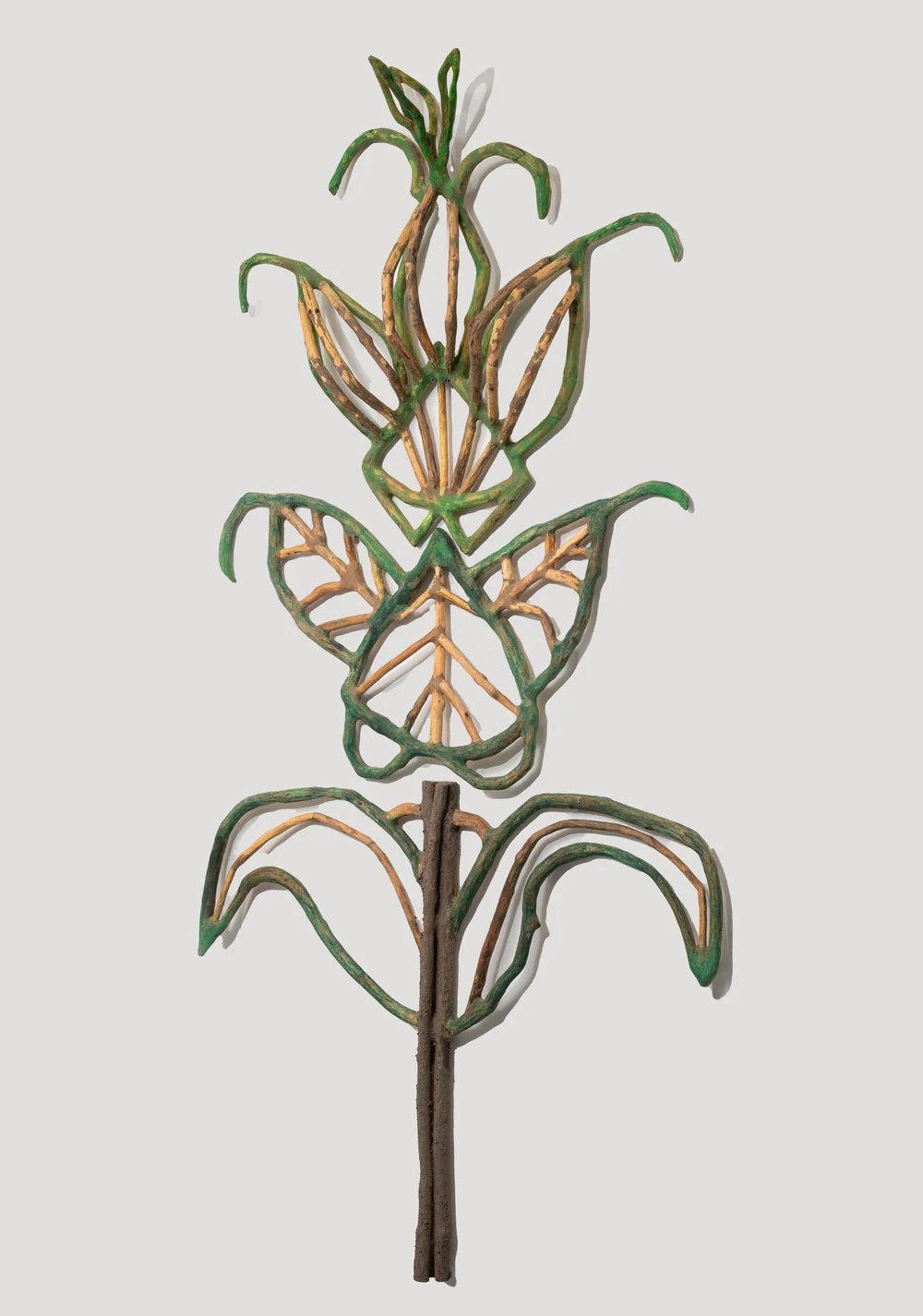
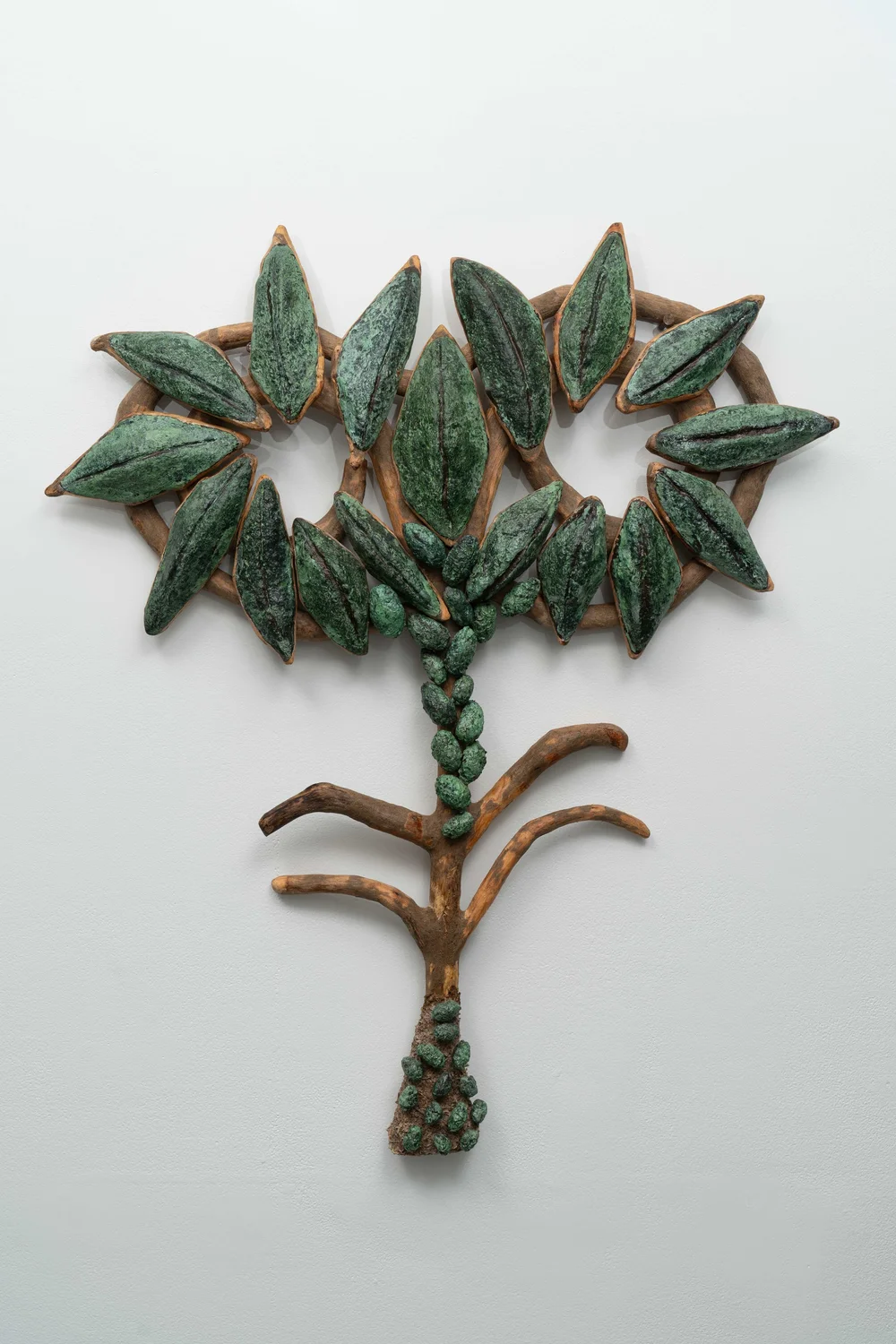
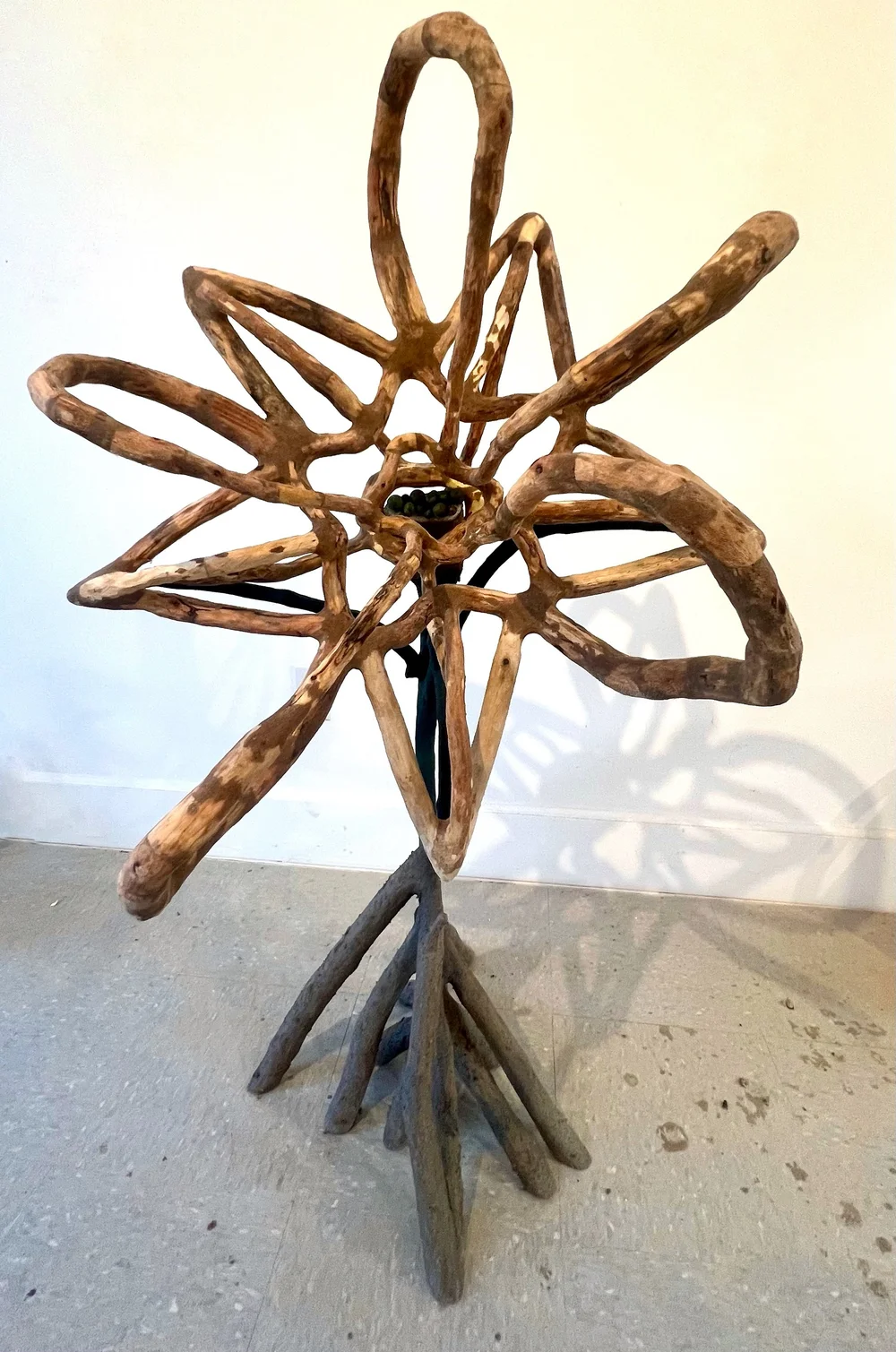
I want the viewer to have a sense of wonder and awe when looking at my work. We have all at one point or another, picked up a stick from the ground, touched the wood, and peeled the bark off with our fingernails. My work taps into that same primal desire of touching nature and being close to it. Trees connect us back to nature, back to this Earth. Over many decades, I have created a unique technique of working with wood—my primary material. To craft my work, I usually begin with a drawing. I start out each day collecting tree limbs and sticks that have fallen to the ground. I never chop down a living tree or use green wood. Next, I debark the branch and look for shapes found within each piece of wood. I then cut and permanently join these small shapes together. Then, all the open joints get filled with a homemade putty and sanded. This process of puttying and sanding usually needs to be repeated at least three times. It is a very time-consuming process, and each sculpture takes me a minimum of a month to build. The sculpture that is being constructed appears like my line drawing, but in space. I am interested in having my work appear as if it grew in nature, when in fact each sculpture is usually composed of hundreds of small pieces of wood that are seamlessly jointed together. My work can be called the ultimate recycling: where I take the detritus of nature and give it a new life. My influences are many: from observing the patterns in nature and plant life on this Earth to studying the heavenly bodies in images beamed back from the Hubble Telescope; from studying ancient Buddhist mandalas and designs to delving deeper into quantum physics; from researching mysterious manuscripts to studying the patterns within our brains. All these influences inspire me daily.
The majority of my work is photo-based, but not obviously so. I began my exploration with a vision of integrating the photographic image with drawing. I experimented with various alternative processes that allowed me to blend these mediums. I began to tear up old and new prints with abandon; no longer was I bound by a single layer of paper as I began making new visual analogies. With this new -found liberating energy, I realized the torn element was a vital component in combination with a variety of mixed media as I began to create images.
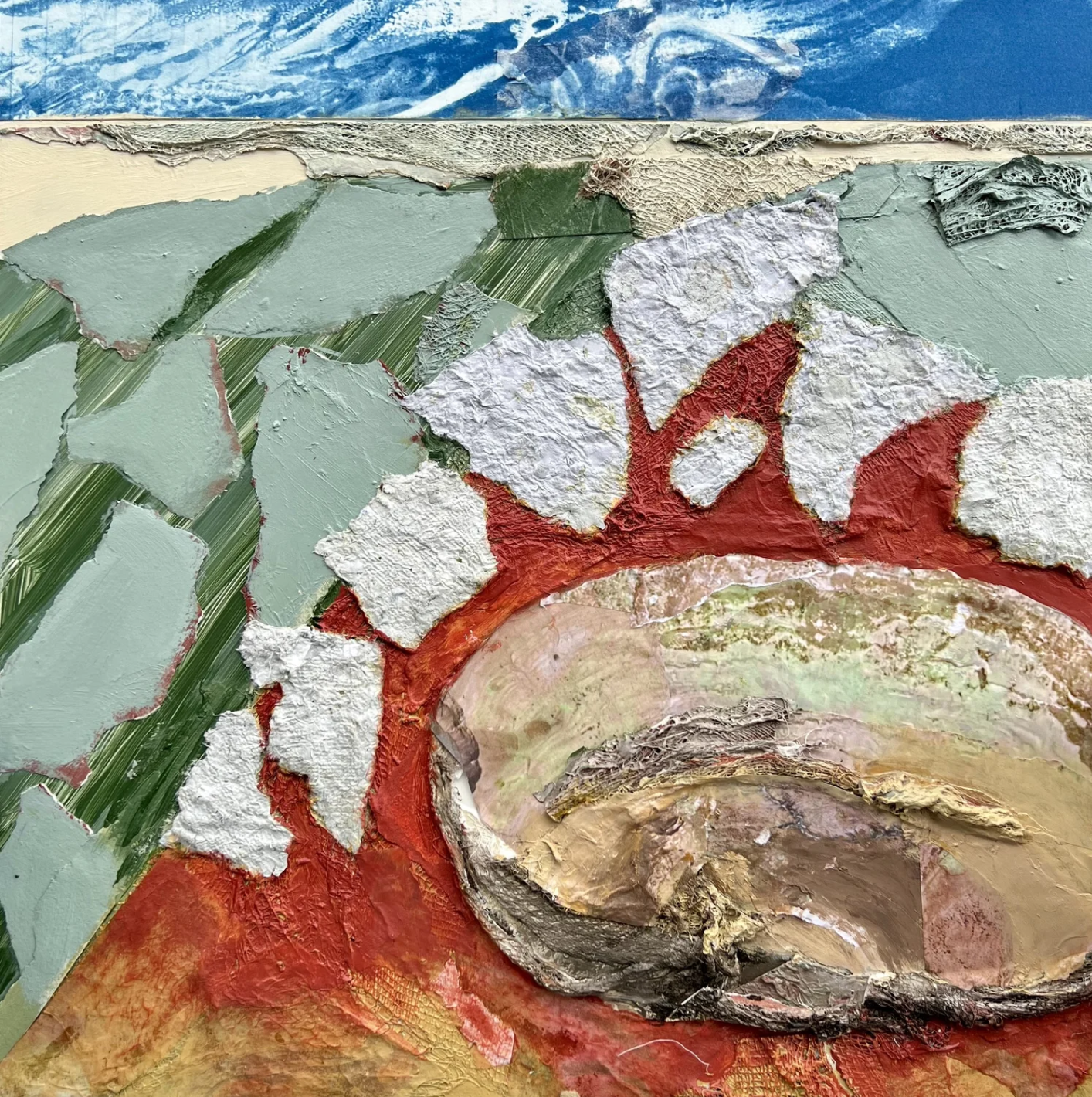
I live along the Long Island Sound surrounded by trees, wildlife and water. As an artist, I respond to the surface texture of the organic matter around me. This interest has led me to create a series on triangular panels that evolved into visual metaphors of specimen boxes of the earth and sea. They are intimate, 8” x 8”, highly textured and layered on top of a manipulated photographic image with objects imbedded into thick wax. I feel that in my own way I am emulating the layer of time in adding my layer of texture into these works.
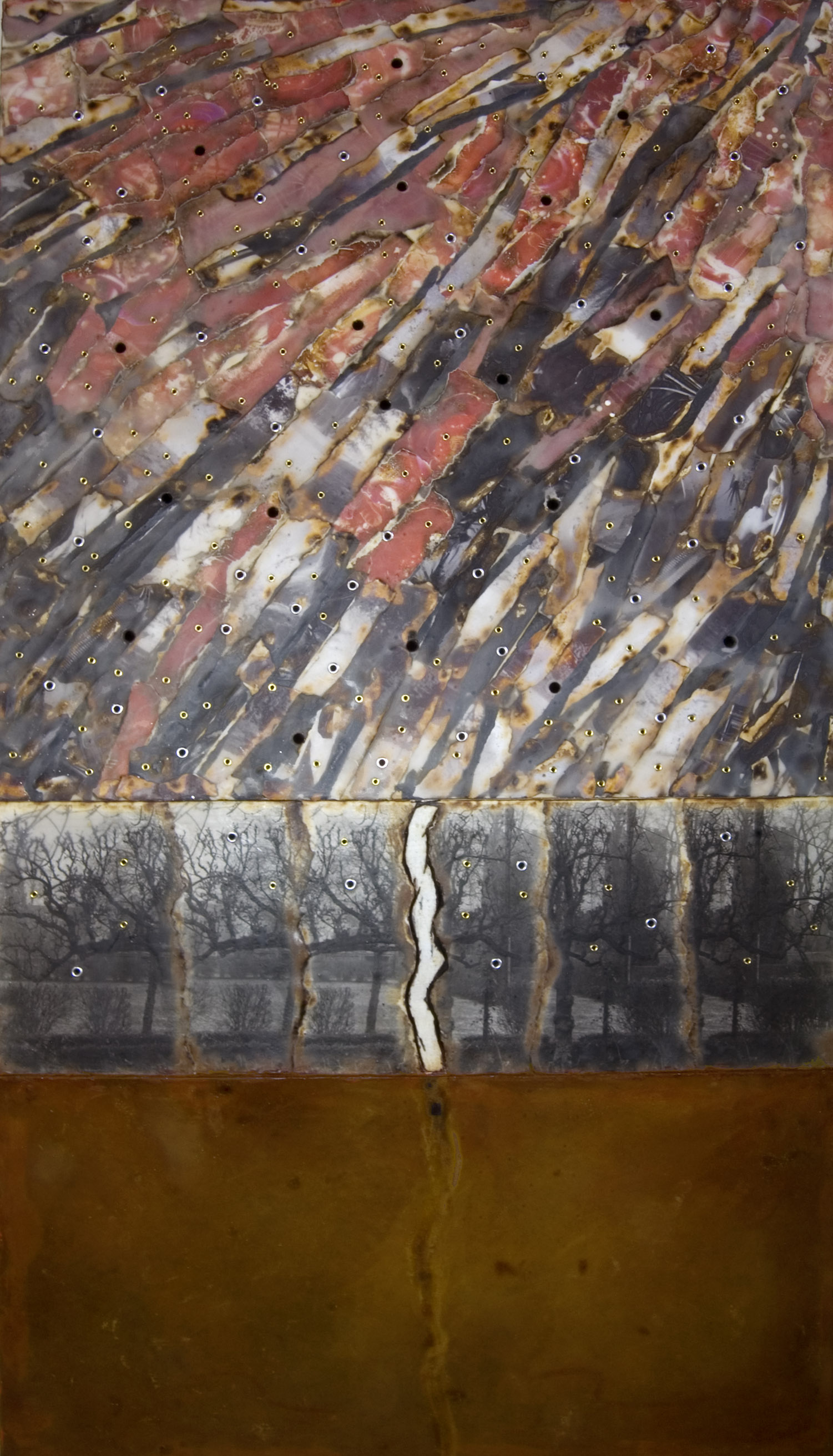
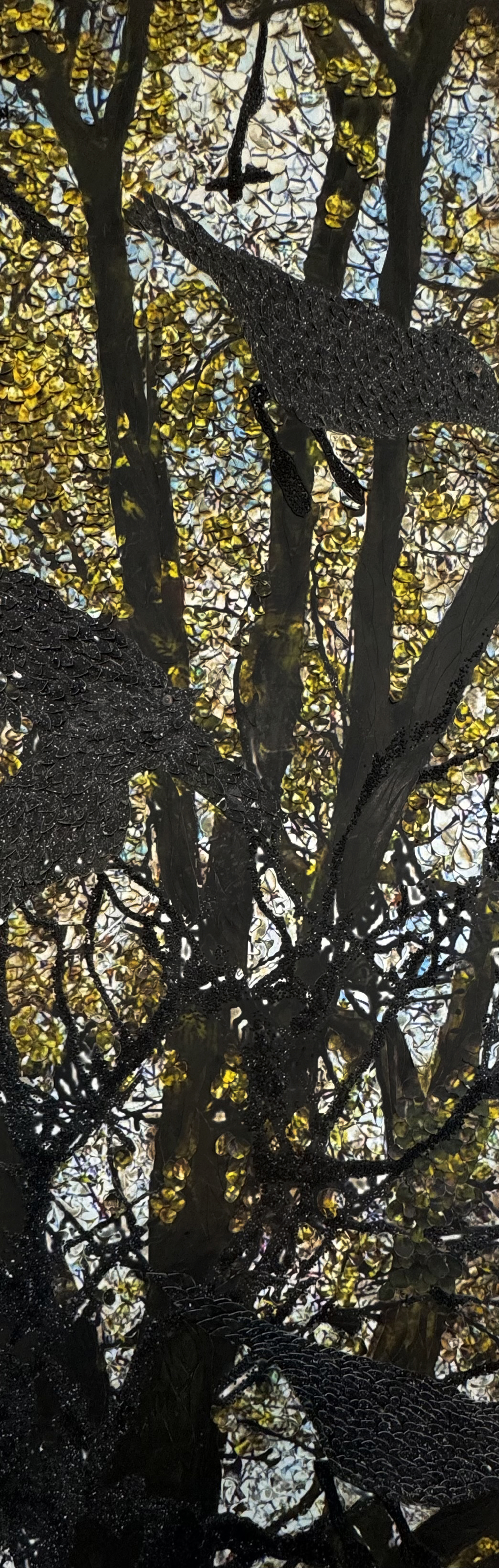
As I continue to explore surface texture, I realized that the soul of trees has always been an interest. In the last year, I have set out to create my personal forest that I call “The Power of Trees”. My fascination is their strength and seasonal transition, not necessarily their unusual genus. In contrast to my triangular specimen boxes, the trees are iPhone photographic images mounted on large vertical panels 24” x 72”. My intention is to mimic nature’s layering as I layer, tear, paint burn and add mixed media. Some of these images can be described as having endured a level of “creative violence” resulting in a rich surface patina.
I am worried about water.
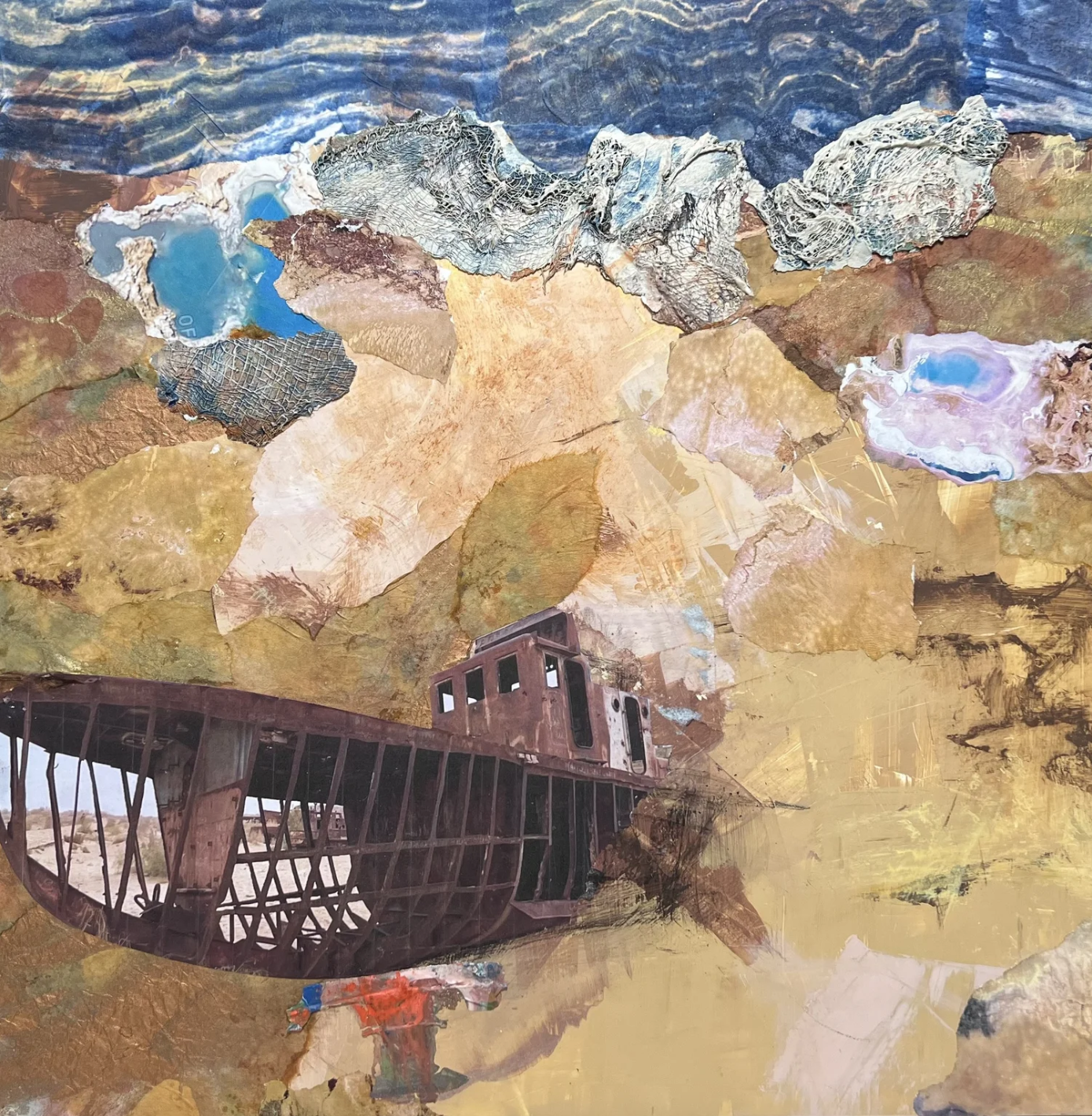
My paintings, installations and writing reflect my concern around global water issues as they relate to climate change, including increased temperatures and evaporation, rising seas, melting permafrost, and desertification. The works reference geological time through the use of satellite images, historic maps, and bird’s-eye perspective.
In 2021, my interest in combining elements of art and science led me to serve as an artist in residence at Planet Labs, a global satellite imaging company based in San Francisco, California, an experience that proved to be transformative. Working with a Planet geologist, I studied the changes to bodies of water that have occurred over decades rather than centuries. Seen from satellite imagery, the horrifying destruction to the geology of the Earth’s regions is intensely beautiful at the same time. To me, the Earth is responding to the damage humanity has caused to it – the Earth is breaking, but beautifully.
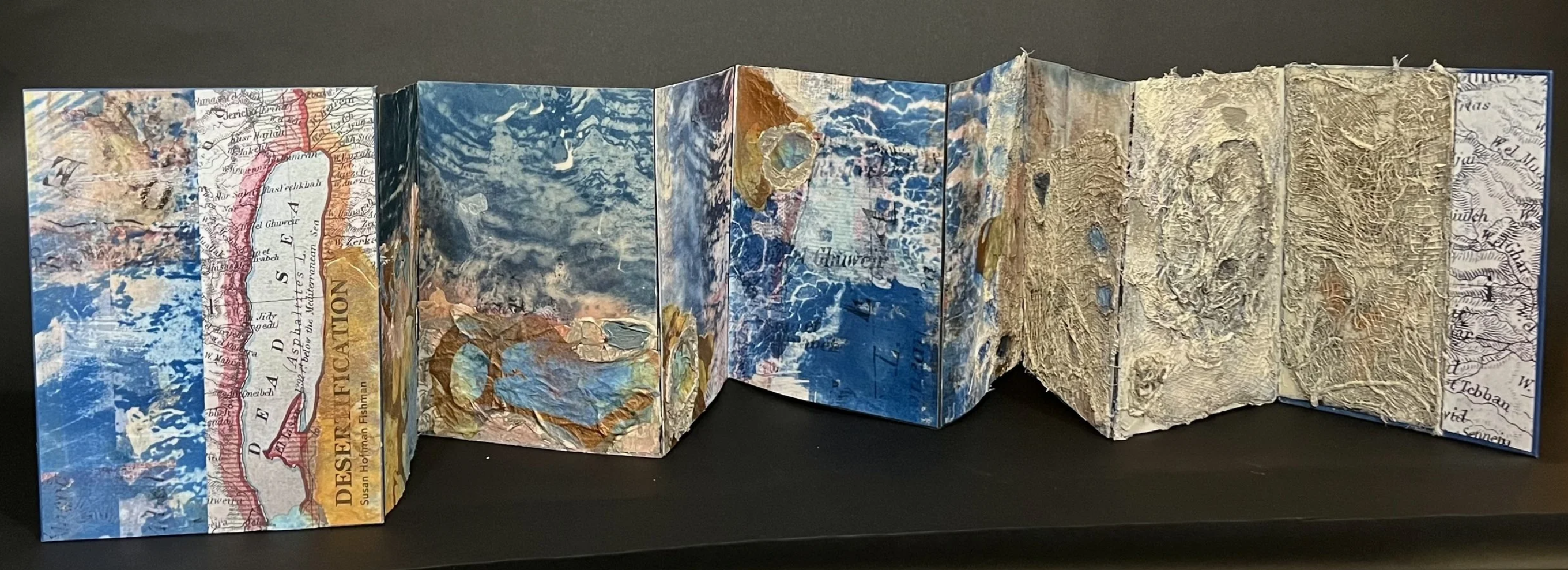
“The Earth is Breaking Beautifully,” “Desertification,” and “The Tale of Lost Waters,” my recent and current series of mixed-media paintings and cyanotype prints, based on satellite imagery, include acrylic, photographs, maps, cyanotype prints, medical gauze, and fragments of recycled works. I incorporate gauze to stress the wounds that have been inflicted on bodies of water by over-extraction, over-consumption and climate change. Commonly associated with historic texts and records, the scroll format of the paintings serves as a genealogical record of the world’s lakes and a memorial to what once flourished.
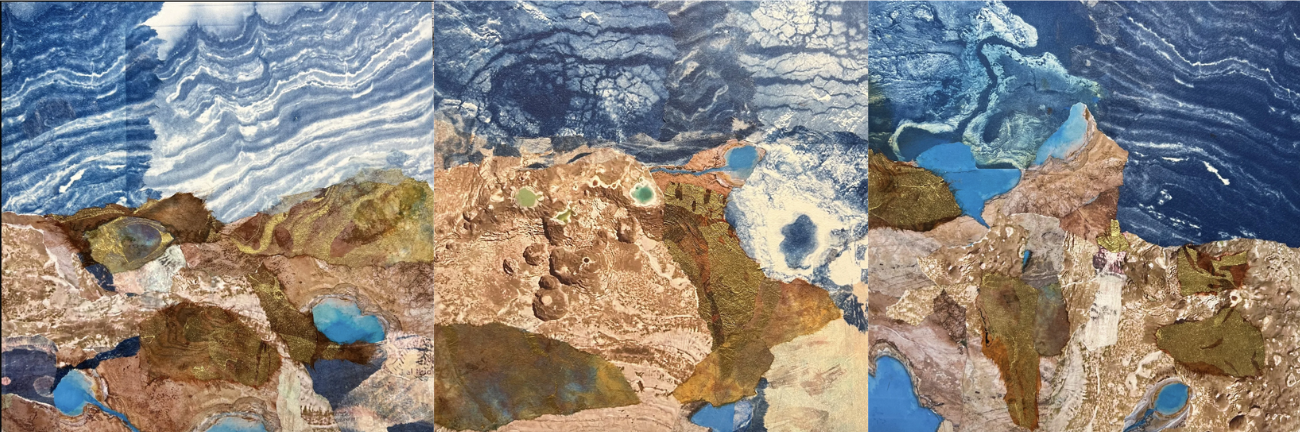
The Tale of Lost Waters highlights many of the 53% of our global lakes and inland seas that have existed for millions of years and are now a fraction of their original size. Each painting portrays the diminishment over mere decades of a single body of water. Today, some of these lakes, such as Lake Poopó in Bolivia, Lake Poyang in China, and Lake Chad, located at the juncture of Nigeria, Niger, Chad and Cameroon, are nearly gone.
The history of landscape painting includes works that propose nature as sublime and romantic. In The Tale of Lost Waters, I create landscapes that are unstable and disfigured. Constructed as highly fractured surfaces, the paintings characterize the landscapes of our time—receding coastlines, pockmarked expanses, the proliferation of sinkholes, and desert where there was once water.